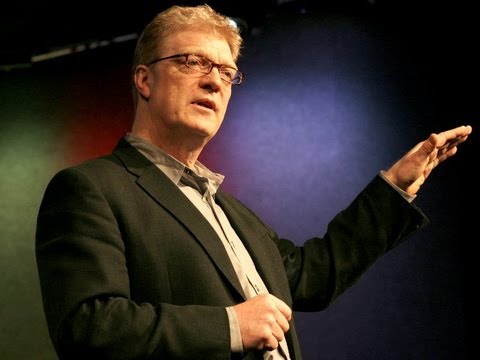
Do schools kill creativity? | Sir Ken Robinson | TED
- By
- TED
- Length
- 19 min
- Language
- English
- Text from
- the video's captions
- Transcribed
- 27 September 2026
Summary
Sir Ken Robinson argues that creativity is as important as literacy in education and should be treated with the same status. He contends that children are naturally creative and unafraid of being wrong, but school systems educate that capacity out of them. Using stories and the example of choreographer Gillian Lynne, he shows how narrowly academic systems waste talent. He concludes that we must rethink education to educate children's whole beings for an unpredictable future.
Key points
- Robinson argues creativity is as important in education as literacy and deserves the same status.
- Children are willing to take chances and are not frightened of being wrong, but schools stigmatize mistakes and educate people out of creativity.
- Every education system on earth has the same hierarchy of subjects, with mathematics and languages at the top and the arts, especially drama and dance, at the bottom.
- Public education systems arose in the 19th century to meet the needs of industrialism, prioritizing useful subjects for work and academic ability.
- Intelligence is diverse, dynamic, and distinct, and creativity often comes from the interaction of different disciplinary ways of seeing things.
- The story of Gillian Lynne shows how a child labelled with a learning disorder was actually a dancer who needed to move to think.
- Academic inflation means degrees are worth less, indicating the whole structure of education is shifting.
- Robinson calls for a new conception of human ecology that educates children's whole beings so they can face the future.
Questions it answers
00:27Education and the future
Why does Robinson say education matters so much right now?
Children starting school will retire in 2065, and nobody knows what the world will look like in five years, yet we're meant to educate them for it. He argues creativity is as important as literacy and all kids have tremendous talents that we squander.
- Creativity should be treated with the same status as literacy.
- All kids have tremendous talents, and we squander them ruthlessly.
03:32Kids and being wrong
What do children's stories tell us about creativity?
Through stories like the girl drawing God and his son's Nativity play, Robinson shows kids will take a chance and aren't frightened of being wrong. If you're not prepared to be wrong, you'll never come up with anything original, yet schools stigmatize mistakes.
- Kids are not frightened of being wrong.
- We are educating people out of their creative capacities.
- Picasso: all children are born artists; we get educated out of creativity.
08:41Hierarchy of subjects
How do school systems rank subjects around the world?
Every system puts mathematics and languages at the top, humanities next, and the arts at the bottom, with drama and dance lowest within the arts. Education focuses progressively from the waist up, then on the head, and slightly to one side.
- No system teaches dance daily as it teaches mathematics.
- The output suggests the purpose of public education is to produce university professors.
11:00Industrialism and academic inflation
Why does the education system look the way it does?
Public systems arose in the 19th century to meet the needs of industrialism, ranking subjects by usefulness for work and privileging academic ability. With more people graduating than in all history, degrees are worth less, a process of academic inflation.
- Many brilliant, creative people think they're not because their talents were stigmatized.
- The whole structure of education is shifting beneath our feet.
12:58Rethinking intelligence
What do we know about intelligence?
Intelligence is diverse, dynamic and distinct. Creativity, defined as the process of having original ideas that have value, often comes from the interaction of different disciplinary ways of seeing things.
- The brain isn't divided into compartments.
- Creativity often comes through interaction between disciplines.
15:14The Gillian Lynne story
How does Gillian Lynne's story illustrate wasted talent?
Gillian Lynne, later choreographer of "Cats" and "Phantom of the Opera," was thought at school in the 1930s to have a learning disorder. A specialist watched her move to music and told her mother she wasn't sick, she was a dancer, and she went on to a brilliant career.
- She was among people who had to move to think.
- Somebody else might have put her on medication and told her to calm down.
18:02Human ecology and conclusion
What does Robinson conclude we must do?
He calls for a new conception of human ecology that reconstitutes our view of the richness of human capacity. We must educate children's whole beings so they can face a future we may not see but they will.
- Education has mined our minds like strip-mining the earth.
- Our task is to educate the whole being and help children make something of the future.
Notes
Creativity and education
- Robinson's central contention is that creativity is as important in education as literacy and should be treated with the same status.
- All kids have tremendous talents, but we squander them ruthlessly.
- Children will take a chance and are not frightened of being wrong; if you're not prepared to be wrong, you'll never come up with anything original.
- By adulthood, most people have lost this capacity, and we run companies and education systems where mistakes are the worst thing you can make.
- Picasso: all children are born artists; the problem is to remain an artist as we grow up. We don't grow into creativity, we get educated out of it.
The hierarchy of subjects
- Every education system on earth has the same hierarchy: mathematics and languages at the top, humanities next, arts at the bottom.
- Within the arts, art and music rank above drama and dance; no system teaches dance daily as it teaches mathematics.
- Education progressively focuses children from the waist up, then on their heads, and slightly to one side.
- Public education systems came into being in the 19th century to meet the needs of industrialism, based on two ideas: the most useful subjects for work are at the top, and academic ability dominates our view of intelligence.
- The whole system is a protracted process of university entrance, so many brilliant, creative people think they're not because their talents weren't valued.
- Academic inflation: degrees are worth less as more people graduate than in all previous history combined.
Intelligence
- Intelligence is diverse (visual, sound, kinesthetic, abstract, movement), dynamic (the brain is interactive, not compartmentalized), and distinct.
- Creativity is defined as the process of having original ideas that have value, often arising from interaction between disciplines.
Gillian Lynne
- The choreographer Gillian Lynne, of "Cats" and "Phantom of the Opera," was thought at school in the 1930s to have a learning disorder; today she might have been labelled with ADHD.
- A specialist saw her moving to music and told her mother: "Gillian isn't sick. She's a dancer."
- At dance school she found people like her who had to move to think, leading to a multimillionaire career. Somebody else might have put her on medication.
Conclusion
- We need a new conception of human ecology, reconstituting our view of the richness of human capacity.
- Our education system has mined our minds like we strip-mine the earth, and it won't serve the future.
- Our task is to educate children's whole beings so they can make something of the future we won't see.
Text from the video's own captions. Summary and notes written by AI from the transcript, so check anything important against the recording.
More from TED
- Elon Musk: The future we're building -- and boring | TED
YouTube · 41 min
- The power of introverts | Susan Cain | TED
YouTube · 19 min
- How to Make Stress Your Friend | Kelly McGonigal | TED
YouTube · 14 min
- The next outbreak? We’re not ready | Bill Gates | TED
YouTube · 9 min
- The happy secret to better work | Shawn Achor
YouTube · 12 min