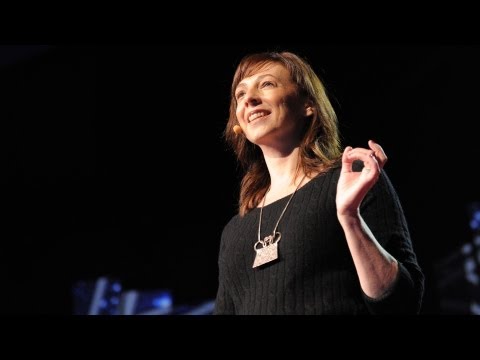
The power of introverts | Susan Cain | TED
- By
- TED
- Length
- 19 min
- Language
- English
- Text from
- the video's captions
- Transcribed
- 27 September 2026
Summary
Susan Cain argues that Western schools and workplaces are designed for extroverts, marginalizing the third to a half of people who are introverts. Drawing on personal stories, history, and research, she shows that solitude is a crucial ingredient of creativity and that introverted leaders often deliver better outcomes. She calls for a cultural rebalancing and offers three calls to action: stop constant group work, seek solitude, and share what's in your own 'suitcase.'
Key points
- A third to a half of the population are introverts, and society has a deep bias against them.
- Introversion is different from shyness: shyness is fear of social judgment, while introversion is about response to stimulation.
- Schools and workplaces are designed mostly for extroverts, through group work and open plan offices.
- Research by Adam Grant found introverted leaders often deliver better outcomes because they let proactive employees run with their ideas.
- Solitude is a crucial ingredient of creativity, as shown by Darwin, Dr. Seuss, and Steve Wozniak.
- Groups follow the most dominant or charismatic person, even though there is zero correlation between being the best talker and having the best ideas.
- America shifted from a culture of character to a culture of personality in the 20th century.
- Cain's three calls to action: stop the madness for constant group work, go to the wilderness, and look at what's inside your own suitcase.
Questions it answers
00:15The camp story
What personal experience shaped Susan Cain's view of introversion?
At summer camp, nine-year-old Cain packed a suitcase of books but was pressured by campers and counselors to be outgoing, so she hid her books all summer. She later made self-negating choices, like becoming a Wall Street lawyer instead of a writer.
- Cain's family treated reading as a group activity, a different way of being social.
- Many introverts make self-negating choices reflexively to pass as extroverts.
04:00Defining introversion
What is the difference between shyness and introversion?
Shyness is about fear of social judgment, while introversion is about how you respond to stimulation. Introverts feel most alive and capable in quieter, low-key environments.
- A third to a half of the population are introverts.
- The key to maximizing talents is putting yourself in the right zone of stimulation.
04:44Institutions built for extroverts
How do schools and workplaces favor extroverts?
Classrooms use desk pods and constant group assignments, and most teachers believe the ideal student is an extrovert even though introverts get better grades. Workplaces use open plan offices and pass over introverts for leadership.
- Kids who prefer working alone are seen as outliers or problem cases.
- Adam Grant's research shows introverted leaders often deliver better outcomes with proactive employees.
07:14Solitude and creativity
Why does solitude matter for creativity?
The most creative people have a serious streak of introversion: Darwin walked alone, Dr. Seuss worked in a bell tower, and Steve Wozniak invented the first Apple computer alone. Groups mimic opinions and follow the most charismatic person, though there is zero correlation between being the best talker and having the best ideas.
- Better to generate ideas alone, then come together as a team in a well-managed environment.
- Religious seekers like Moses, Jesus, Buddha, and Muhammad went alone to the wilderness for revelations.
11:34Cultural history of the bias
Why does Western culture favor extroverts?
America shifted from a culture of character, valuing inner selves and moral rectitude (Abraham Lincoln), to a 20th-century culture of personality, where people moving to cities had to prove themselves among strangers, making magnetism and charisma seem important.
- Self-help books changed from 'Character, the Grandest Thing in the World' to 'How to Win Friends and Influence People.'
- Cain is not calling for abolishing teamwork; complex problems need armies of people working together.
13:33Grandfather's example
What does Cain's grandfather illustrate about introverts?
Her grandfather, a rabbi for 62 years, was modest and introverted — he struggled with eye contact and ended calls early — yet when he died at 94, police closed streets to accommodate the crowd mourning him.
- Cain spent seven blissful years writing her book on introversion, her version of his library hours.
- She spent a year practicing public speaking, her 'year of speaking dangerously.'
16:17Three calls for action
What does Cain ask the audience to do?
Stop the madness for constant group work while encouraging casual interactions; go to the wilderness and unplug to get inside your own head; and look at what's inside your own suitcase, with introverts occasionally opening theirs up because the world needs what they carry.
- Extroverted children also need to work on their own, where deep thought comes from.
- Cain ends wishing the courage to speak softly.
Notes
Personal story
- At age nine, Susan Cain brought a suitcase of books to summer camp and was pressured to be "rowdie" and outgoing.
- She put her books away for the whole summer, feeling guilty, and later made self-negating choices like becoming a Wall Street lawyer instead of a writer.
What introversion is
- Shyness is fear of social judgment; introversion is about how you respond to stimulation.
- Introverts feel most alive and capable in quieter, more low-key environments.
- A third to a half of the population are introverts; there is no pure introvert or extrovert (Carl Jung), and people in the middle are ambiverts.
Institutional bias
- Schools use pods of desks and constant group assignments; kids who prefer working alone are seen as outliers or problem cases.
- Most teachers believe the ideal student is an extrovert, even though introverts get better grades and are more knowledgeable.
- Open plan offices subject workers to constant noise and gaze; introverts are routinely passed over for leadership.
- Adam Grant's research at Wharton: introverted leaders deliver better outcomes with proactive employees because they let them run with their ideas.
- Transformative introverted leaders: Eleanor Roosevelt, Rosa Parks, Gandhi — they took the spotlight because they were driven to do what they thought was right.
Solitude and creativity
- Solitude is a crucial ingredient of creativity: Darwin's walks, Dr. Seuss's bell tower office, Steve Wozniak inventing the first Apple computer alone at Hewlett-Packard.
- Groups mirror and mimic opinions, following the most charismatic person, though there is zero correlation between being the best talker and having the best ideas.
- Religious seekers — Moses, Jesus, Buddha, Muhammad — went off alone to the wilderness for revelations: "no wilderness, no revelations."
Cultural history
- Western societies favored the man of action over the man of contemplation.
- America moved from a culture of character (Abraham Lincoln as role model) to a 20th-century culture of personality (magnetism, charisma, salesmen).
Her grandfather
- A rabbi for 62 years, modest and introverted, who had trouble making eye contact with his congregation, yet streets were closed for the crowd mourning his death at 94.
Three calls for action
1. Stop the madness for constant group work; allow more privacy, freedom, and autonomy at work and school.
2. Go to the wilderness — unplug and get inside your own head more often.
3. Look at what's inside your own suitcase; introverts should occasionally open it up, because the world needs what they carry.
Text from the video's own captions. Summary and notes written by AI from the transcript, so check anything important against the recording.
More from TED
- Elon Musk: The future we're building -- and boring | TED
YouTube · 41 min
- How to Make Stress Your Friend | Kelly McGonigal | TED
YouTube · 14 min
- The next outbreak? We’re not ready | Bill Gates | TED
YouTube · 9 min
- The happy secret to better work | Shawn Achor
YouTube · 12 min
- The puzzle of motivation | Dan Pink | TED
YouTube · 19 min