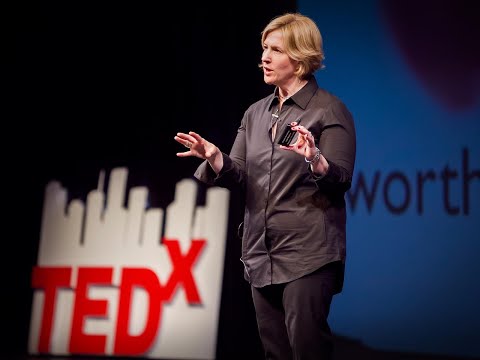
The Power of Vulnerability | Brené Brown | TED
- By
- TED
- Length
- 20 min
- Language
- English
- Text from
- the video's captions
- Transcribed
- 27 September 2026
Summary
Brené Brown, a qualitative researcher-storyteller, shares how her research on connection led her to study shame and vulnerability. After six years and thousands of stories, she found that the only thing separating people with a strong sense of love and belonging from those who struggle for it is the belief that they are worthy. She concludes that embracing vulnerability, rather than numbing it, is the birthplace of joy, creativity, belonging and love.
Key points
- Brené Brown identifies as a researcher-storyteller who collects stories as data with a soul.
- Shame is the fear of disconnection — the fear that we won't be worthy of connection if others truly see us.
- The one variable separating people with a strong sense of love and belonging from those who struggle is believing they are worthy.
- Whole-hearted people have courage, compassion, connection through authenticity, and fully embrace vulnerability.
- Vulnerability is the birthplace of joy, creativity, belonging and love.
- You cannot selectively numb emotions — numbing hard feelings also numbs joy, gratitude and happiness.
- We numb vulnerability through addiction, certainty, blame, perfectionism and pretending.
- Brown's conclusion: let ourselves be seen, love without guarantees, practice gratitude, and believe we are enough.
Questions it answers
00:16Researcher-storyteller
Who is Brené Brown and how does she approach her research?
Brown is a qualitative researcher who calls herself a researcher-storyteller because she collects stories, viewing stories as data with a soul. She wanted to take messy but important topics and make them understandable and measurable, starting with connection.
- Brown describes herself as a researcher-storyteller who collects stories.
- She set out to make messy, important topics measurable and organized.
- She began her research with connection, which she says is why we are here.
03:13Shame and vulnerability
What did Brown discover when she asked people about connection?
People told stories of disconnection, which led her to identify shame as the fear of disconnection — the fear that if people see something about us, we won't be worthy of connection. Underpinning shame is excruciating vulnerability, because connection requires allowing ourselves to be really seen.
- Shame is the fear of disconnection and is universal.
- Shame is underpinned by excruciating vulnerability.
- Connection requires allowing ourselves to be really seen.
06:49The whole-hearted
What separated people with a strong sense of love and belonging from those who struggled?
After six years of research, Brown found only one variable: the people who have a strong sense of love and belonging believe they are worthy of it. She called these people whole-hearted and found they had courage, compassion, connection through authenticity, and fully embraced vulnerability.
- The one variable was believing you are worthy of love and belonging.
- Whole-hearted people have courage, compassion and authenticity.
- They fully embraced vulnerability as necessary, not comfortable.
10:59Breakdown and therapy
How did Brown personally react to her findings on vulnerability?
Her mission to control and predict had turned up the answer that the way to live is with vulnerability, which triggered a breakdown — her therapist called it a spiritual awakening. She spent a year in therapy, describing it as a street fight in which she lost the fight but probably won her life back.
- Brown's one-year study turned into six years of research.
- Her therapist called her breakdown a spiritual awakening.
- She described facing vulnerability as a yearlong street fight that she lost but won her life back.
13:59How we numb vulnerability
How do people deal with vulnerability, according to Brown?
We numb vulnerability, which she links to being the most in-debt, obese, addicted and medicated adult cohort in U.S. history. But you cannot selectively numb emotion — numbing hard feelings also numbs joy, gratitude and happiness, creating a dangerous cycle. We also make uncertain things certain, blame, perfect (especially our children), and pretend our actions don't affect others.
- We numb vulnerability through debt, obesity, addiction and medication.
- You cannot selectively numb emotions without numbing joy and gratitude.
- We also numb by making uncertain things certain, through blame, perfectionism and pretending.
19:05Another way
What does Brown recommend as an alternative to numbing vulnerability?
She suggests letting ourselves be deeply and vulnerably seen, loving with our whole hearts even though there's no guarantee, practicing gratitude and joy in moments of terror, and believing that we are enough. Working from a place of 'I'm enough' makes us stop screaming and start listening, and makes us kinder to others and ourselves.
- Let ourselves be deeply and vulnerably seen.
- Love with whole hearts despite no guarantees.
- Practice gratitude and believe we are enough.
Notes
Background
- Brené Brown describes herself as a researcher-storyteller — a qualitative researcher who collects stories, or "data with a soul."
- She began studying connection, which she says is why we're here and what gives purpose and meaning to our lives.
Shame and Vulnerability
- When asked about connection, people told stories of disconnection, which led her to discover shame.
- Shame is the fear of disconnection: "Is there something about me that, if other people know it or see it, that I won't be worthy of connection?"
- Shame is universal; the only people who don't experience it have no capacity for human empathy or connection.
- Underpinning shame is excruciating vulnerability — connection requires allowing ourselves to be seen, really seen.
The Whole-Hearted
- Her one-year study became six years: thousands of stories, hundreds of long interviews, focus groups.
- The only variable separating people with a strong sense of love and belonging from those who struggle: they believe they're worthy of love and belonging.
- She called these people whole-hearted. What they had in common:
- Courage (from Latin "cor," heart) — the courage to be imperfect, to tell the story of who you are with your whole heart.
- Compassion — kind to themselves first, then to others.
- Connection — as a result of authenticity, letting go of who they thought they should be.
- They fully embraced vulnerability as necessary, not comfortable or excruciating.
How We Numb Vulnerability
- We live in a vulnerable world and we numb vulnerability — Brown links this to being the most in-debt, obese, addicted and medicated adult cohort in U.S. history.
- You cannot selectively numb emotion: numbing fear, grief, shame and disappointment also numbs joy, gratitude and happiness — a dangerous cycle.
- Other ways we numb: making the uncertain certain (politics, religion), blame (a way to discharge pain and discomfort), perfectionism (especially of children), and pretending our actions don't affect others.
- Our job with children is to say: "You're imperfect, and you're wired for struggle, but you are worthy of love and belonging."
The Alternative
- Let ourselves be seen, deeply and vulnerably.
- Love with our whole hearts even though there's no guarantee.
- Practice gratitude and joy in moments of terror — "to feel this vulnerable means I'm alive."
- Believe that we're enough — then we stop screaming and start listening, and we're kinder to others and to ourselves.
Text from the video's own captions. Summary and notes written by AI from the transcript, so check anything important against the recording.
More from TED
- Elon Musk: The future we're building -- and boring | TED
YouTube · 41 min
- The power of introverts | Susan Cain | TED
YouTube · 19 min
- How to Make Stress Your Friend | Kelly McGonigal | TED
YouTube · 14 min
- The next outbreak? We’re not ready | Bill Gates | TED
YouTube · 9 min
- The happy secret to better work | Shawn Achor
YouTube · 12 min