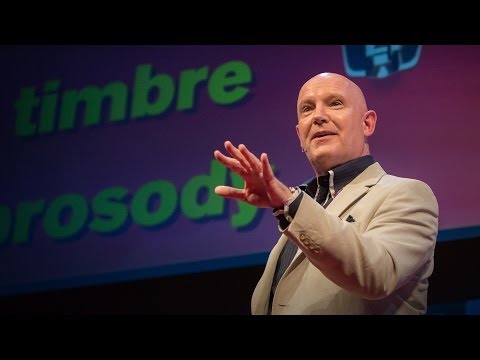
How to Speak So That People Want to Listen | Julian Treasure | TED
- By
- TED
- Length
- 10 min
- Language
- English
- Text from
- the video's captions
- Transcribed
- 27 September 2026
Summary
Julian Treasure explains why people don't listen when we speak, listing seven habits to avoid—gossip, judging, negativity, complaining, excuses, exaggeration, and dogmatism—and four positive foundations spelled HAIL: honesty, authenticity, integrity, and love. He then tours the vocal toolbox—register, timbre, prosody, pace, pitch, and volume—and demonstrates six vocal warm-up exercises. He closes by imagining a world of conscious speaking, listening, and sound design.
Key points
- The seven deadly sins of speaking are gossip, judging, negativity, complaining, excuses, exaggeration/embroidery, and dogmatism.
- HAIL stands for honesty, authenticity, integrity, and love, and describes speech people want to receive.
- Speaking from the chest gives the voice weight because we associate depth with power and authority.
- Timbre can be improved through training with a voice coach, breathing, posture, and exercises.
- Prosody is the meta-language that imparts meaning, and repetitive or monotone delivery hinders communication.
- Pace, pitch, and volume—including silence—are tools for emphasis and attention.
- Treasure demonstrates six warm-up exercises: sighing 'ahhh', 'ba ba ba', lip trills 'brrr', 'la la la', rolling an R, and the siren 'weeeaawww'.
- He envisions a world where sound is created, consumed, and environments designed consciously, making understanding the norm.
Questions it answers
00:13Seven deadly sins
What habits make people stop listening?
Treasure lists gossip, judging, negativity, complaining, excuses, exaggeration, and dogmatism as habits that make speech hard to listen to. He illustrates each with examples, such as his mother's negativity and complaining as 'viral misery'.
- Gossiping about someone means they'll likely gossip about you.
- Exaggeration demeans language and can slide into lying.
- Dogmatism conflates facts with opinions, so you're 'listening into the wind'.
02:51HAIL foundations
What positive foundations make speech powerful?
HAIL stands for honesty, authenticity, integrity, and love. Treasure says words built on these will be greeted or acclaimed enthusiastically.
- Authenticity is 'standing in your own truth'.
- Love tempers absolute honesty—some honesty isn't necessary.
- Wishing someone well makes judging them at the same time nearly impossible.
03:58The vocal toolbox
How does the way you say things matter?
Treasure walks through register, timbre, prosody, pace, pitch, and volume as tools that increase the power of speaking. He notes we prefer lower, rich, warm voices and warns against monotone delivery and 'sodcasting'.
- Chest register conveys power and authority—we vote for politicians with lower voices.
- Timbre can be trained with breathing, posture, and exercises.
- Silence is a powerful tool; don't fill it with ums and ahs.
07:02Vocal warm-ups
How should you warm up your voice before speaking?
Treasure demonstrates six exercises he does before every talk: a sighing 'ahhh', 'ba ba ba' for the lips, a 'brrr' lip trill, exaggerated 'la la la' for the tongue, rolling an R, and the siren 'weeeaawww' from high to low.
- Do these any time you're going to talk to somebody important.
- The siren, from 'we' high to 'aw' low, is the one exercise to keep if you only do one.
08:44Vision of conscious sound
What is Treasure's closing message?
He contrasts today's world of poor speaking, non-listening, and noisy environments with a world of powerful speaking, conscious listening, and environments designed for sound. In that world, understanding would be the norm—an idea worth spreading.
- Speak powerfully to people who are listening consciously.
- Design environments consciously for sound.
Notes
Why people don't listen
- Julian Treasure calls the human voice the most powerful sound in the world, able to start a war or say "I love you," yet many people find others don't listen to them.
- He identifies seven habits to avoid: gossip, judging, negativity, complaining, excuses, exaggeration (embroidery), and dogmatism (confusing facts with opinions).
- Complaining is described as "viral misery"; exaggeration demeans language and can become lying.
HAIL: the positive foundations
- Honesty: being true, straight and clear in what you say.
- Authenticity: being yourself, "standing in your own truth."
- Integrity: being your word, doing what you say, being trustworthy.
- Love: wishing people well; it tempers absolute honesty and makes judging someone at the same time nearly impossible.
- Together these spell HAIL—"to greet or acclaim enthusiastically"—how our words will be received.
The vocal toolbox
- Register: speaking from the chest adds weight; we associate depth with power and authority, which is why we vote for politicians with lower voices.
- Timbre: the way the voice feels; we prefer rich, smooth, warm voices, and timbre can be trained with a voice coach, breathing, posture, and exercises.
- Prosody: the sing-song meta-language that imparts meaning; monotone or repetitive prosody (every sentence sounding like a question) restricts communication.
- Pace: speeding up or slowing down to emphasize, with silence as a powerful tool—no need to fill it with ums and ahs.
- Pitch: changes meaning, e.g. "Where did you leave my keys?" delivered two ways.
- Volume: loud for excitement, quiet for attention; avoid "sodcasting"—imposing sound carelessly on others.
Warm-up exercises
- Before important talks: arms up with a deep sigh "ahhh"; "ba ba ba" for lips; lip trill "brrr"; exaggerated "la la la" for the tongue; rolling an R; and the siren "weeeaawww" from high "we" to low "aw."
Closing vision
- Treasure imagines a world of powerful speaking, conscious listening, and environments designed for sound—where understanding would be the norm.
Text from the video's own captions. Summary and notes written by AI from the transcript, so check anything important against the recording.
More from TED
- Elon Musk: The future we're building -- and boring | TED
YouTube · 41 min
- The power of introverts | Susan Cain | TED
YouTube · 19 min
- How to Make Stress Your Friend | Kelly McGonigal | TED
YouTube · 14 min
- The next outbreak? We’re not ready | Bill Gates | TED
YouTube · 9 min
- The happy secret to better work | Shawn Achor
YouTube · 12 min