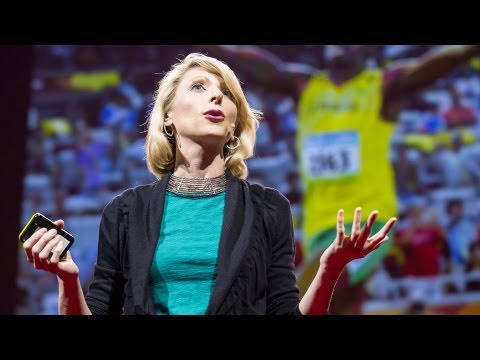
Your Body Language May Shape Who You Are | Amy Cuddy | TED
- By
- TED
- Length
- 21 min
- Language
- English
- Text from
- the video's captions
- Transcribed
- 27 September 2026
Summary
Social psychologist Amy Cuddy explains that body language shapes not only how others judge us but also our own thoughts, feelings and hormones. She describes experiments showing that two minutes of high-power posing raises testosterone, lowers cortisol, increases risk tolerance and improves performance in stressful job interviews. She closes with her personal story of feeling like an impostor after a car accident and urges listeners to 'fake it till you become it.'
Key points
- Amy Cuddy opens with a free life hack: change your posture for two minutes before stressful situations.
- Judgments from body language predict meaningful outcomes, such as physician lawsuits and 70 percent of U.S. Senate and gubernatorial races.
- Powerful nonverbals involve expanding and opening up, while powerless ones involve closing up and making yourself small.
- In her experiment, high-power posers showed about a 20-percent testosterone increase and 25-percent cortisol decrease; low-power posers showed the reverse.
- In a stressful job interview test, blind coders wanted to hire the high-power posers, driven by their presence rather than speech content.
- Cuddy shares her story of a car accident at 19 that lowered her IQ and left her feeling like an impostor at Princeton and Harvard.
- Her advice is to 'fake it till you become it' and to power pose for two minutes before evaluative situations.
- She asks listeners to share the science with people who lack resources, status and power.
Questions it answers
00:00The two-minute life hack
What simple change does Amy Cuddy propose at the start?
She asks the audience to audit their posture and offers a free, no-tech life hack: changing your posture for two minutes could significantly change how your life unfolds.
- Change your posture for two minutes.
- Small tweaks to body language could change your life.
01:02How body language shapes judgments
How do nonverbals affect how others judge us?
Social scientists show that sweeping judgments from body language predict meaningful outcomes such as hiring, dating, and lawsuits. Examples include Nalini Ambady's physician clips and Alex Todorov's one-second face judgments predicting 70 percent of Senate and gubernatorial races.
- Judgments from nonverbals predict real outcomes.
- Emoticons in online negotiations can increase claimed value.
03:07Power and powerlessness expressed in the body
What do powerful and powerless nonverbals look like?
Power is expressed by expanding, opening up, and taking up space, seen across the animal kingdom and even in people congenitally blind. Powerlessness is the opposite: closing up, wrapping up, and making yourself small, and people complement rather than mirror others' power nonverbals.
- Pride expressions are universal and innate.
- We do the opposite of a powerful counterpart, shrinking ourselves.
05:42Classroom observations and the study question
What did Cuddy notice in her MBA classroom and what did she want to test?
She noticed students showing the full range of power nonverbals, related to gender and to participation, which counts for half the grade. With Dana Carney, she asked whether you can fake it till you make it, and whether bodies change minds, focusing on hormones.
- Women were more likely to make themselves small.
- Powerful people have high testosterone and low cortisol.
10:10The power posing experiment
What happened when people held high- or low-power poses for two minutes?
High-power posers gambled more (86 percent vs. 60 percent), showed about a 20-percent testosterone increase and 25-percent cortisol decrease, while low-power posers showed the reverse hormonal changes.
- Two minutes of posing changed hormones and risk tolerance.
- High power configures the brain to be assertive and comfortable.
12:48Applying it to job interviews
Does power posing help in stressful evaluations like job interviews?
In a stressful recorded interview with unresponsive judges, blind coders wanted to hire the high-power posers and rated them more positively, driven by presence rather than speech content or qualifications.
- Presence, not content, drove the hiring effect.
- Pose before the interview, not during it.
16:03Cuddy's impostor story
Why does Cuddy personally understand feeling like an impostor?
After a car accident at 19, her IQ dropped two standard deviations and she was told she would not finish college. She eventually graduated, and at Princeton her advisor Susan Fiske told her to fake it by doing every talk until she became it, which she did through Harvard.
- Losing her core identity left her feeling powerless.
- Her advisor told her to keep doing talks until it felt real.
18:35Fake it till you become it
What is Cuddy's final advice to the audience?
She urges listeners to fake it till they become it, not just till they make it, and to try two minutes of power posing before stressful evaluative situations. She also asks them to share the science with people who lack resources, technology, status, and power.
- Tiny tweaks can lead to big changes.
- Share the science because it needs only a body, privacy, and two minutes.
Notes
Overview
Amy Cuddy, a social psychologist, argues that nonverbal behavior governs not only how others see us but also how we see ourselves. She offers a two-minute posture intervention as a life hack.
Body language and judgment
- People make sweeping judgments from body language that predict outcomes like hiring, dating, and lawsuits.
- Nalini Ambady showed 30-second soundless clips of physicians predict malpractice suits; Alex Todorov found one-second judgments of candidates' faces predict 70 percent of U.S. Senate and gubernatorial races.
Power nonverbals
- Powerful nonverbals involve expanding, opening up, and taking up space; powerless ones involve closing up and making yourself small.
- Jessica Tracy found pride expressions (arms up in a V, chin lifted) occur even in people congenitally blind.
- In her MBA classroom, Cuddy noticed the full range of power nonverbals, related to gender and to participation, which counts for half the grade.
The experiment
- With Dana Carney, she tested whether faking power produces real outcomes.
- Participants held high- or low-power poses for two minutes.
- Results: 86 percent of high-power posers gambled vs. 60 percent of low-power; testosterone rose about 20 percent (high) vs. fell 10 percent (low); cortisol fell 25 percent (high) vs. rose 15 percent (low).
Job interviews
- In a stressful recorded interview with judges giving no feedback, blind coders wanted to hire the high-power posers.
- The effect was driven by presence, not speech content or qualifications.
Personal story and conclusion
- After a car accident at 19, Cuddy's IQ dropped two standard deviations; she felt like an impostor at Princeton and Harvard.
- Her advisor Susan Fiske told her to fake it by doing every talk until she became it.
- A student who said "I'm not supposed to be here" faked it till she became it.
- Advice: tiny tweaks lead to big changes; power pose two minutes before evaluative situations and share the science with those without resources.
Text from the video's own captions. Summary and notes written by AI from the transcript, so check anything important against the recording.
More from TED
- Elon Musk: The future we're building -- and boring | TED
YouTube · 41 min
- The power of introverts | Susan Cain | TED
YouTube · 19 min
- How to Make Stress Your Friend | Kelly McGonigal | TED
YouTube · 14 min
- The next outbreak? We’re not ready | Bill Gates | TED
YouTube · 9 min
- The happy secret to better work | Shawn Achor
YouTube · 12 min