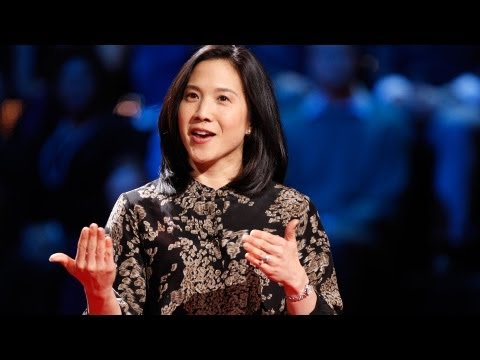
Grit: The Power of Passion and Perseverance | Angela Lee Duckworth | TED
- By
- TED
- Length
- 6 min
- Language
- English
- Text from
- the video's captions
- Transcribed
- 27 September 2026
Summary
Angela Lee Duckworth describes leaving a management consulting job to teach seventh grade math in New York City, where she noticed that IQ did not distinguish her best and worst students. She became a psychologist and studied success in challenging settings including West Point, the National Spelling Bee, tough schools, and private companies. Across all these contexts, grit—passion and perseverance for long-term goals—emerged as the strongest predictor of success. She admits science knows little about how to build grit, though Carol Dweck's growth mindset is the best idea so far.
Key points
- Duckworth left a management consulting job at 27 to teach seventh grade math in New York City public schools.
- She observed that her strongest students did not necessarily have the highest IQ scores.
- She studied success in West Point, the National Spelling Bee, tough-neighborhood schools, and private companies.
- Grit, not social intelligence, good looks, physical health, or IQ, was the significant predictor of success in every context.
- Grit is defined as passion and perseverance for very long-term goals, living life like a marathon, not a sprint.
- Grittier juniors in Chicago public schools were significantly more likely to graduate, even when matched on family income and test scores.
- Talent doesn't make you gritty; in the data, grit is usually unrelated or inversely related to measures of talent.
- The best idea so far for building grit is Carol Dweck's growth mindset, the belief that the ability to learn can change with effort.
- Duckworth calls for testing ideas and being willing to fail and start over—being gritty about getting kids grittier.
Questions it answers
00:12Teaching seventh grade math
What did Duckworth observe while teaching math in New York City public schools?
She noticed that IQ was not the only difference between her best and worst students—some strong performers did not have high IQ scores, and some of her smartest kids weren't doing well. She became convinced every student could learn the material if they worked hard and long enough.
- IQ was not the only difference between her best and worst students.
- She believed every student could learn the material with enough hard work.
01:25Becoming a psychologist
Why did Duckworth leave teaching for graduate school?
She concluded that education needs a better understanding of students and learning from a motivational and psychological perspective, since doing well in school and life may depend on much more than the ability to learn quickly and easily. She went to graduate school to become a psychologist and studied who is successful in challenging settings and why.
- Education measures IQ best, but success may depend on much more.
- Her research question was: who is successful here and why?
02:01Studying success in challenging settings
What contexts did her research team study?
They studied West Point cadets, National Spelling Bee competitors, rookie teachers in tough neighborhoods, and salespeople at private companies, predicting who would persist, stay effective, or earn the most.
- Studies spanned West Point, the National Spelling Bee, teaching, and sales.
- In every context, grit emerged as the significant predictor of success.
02:47Defining grit
What is grit and why does it matter?
Grit is passion and perseverance for very long-term goals—sticking with your future day in, day out, for years, living life like a marathon, not a sprint. In Chicago public schools, grittier juniors were significantly more likely to graduate even when matched on family income, test scores, and feelings of safety at school.
- Grit is stamina and long-term perseverance toward goals.
- Grittier kids were more likely to graduate regardless of income or test scores.
03:43How to build grit
What do we know about building grit in kids?
The honest answer is that Duckworth doesn't know—science knows little about building grit. Talent doesn't make you gritty; grit is usually unrelated or inversely related to measures of talent. The best idea so far is Carol Dweck's growth mindset: the belief that the ability to learn is not fixed and can change with effort.
- Science knows little about how to build grit.
- Grit is usually unrelated or inversely related to talent.
- Growth mindset is the best idea so far for building grit.
05:29The work ahead
What does Duckworth say must happen next?
We need to take our best ideas and strongest intuitions, test them, and measure whether we've been successful, being willing to fail, be wrong, and start over with lessons learned. In other words, we need to be gritty about getting our kids grittier.
- Test ideas and measure success.
- Be willing to fail and start over with lessons learned.
Notes
From consulting to the classroom
- At 27, Angela Lee Duckworth left management consulting to teach seventh grade math in New York City public schools.
- She noticed that IQ was not the only difference between her best and worst students; some strong performers did not have stratospheric IQ scores.
- She became convinced every student could learn the material—ratios, decimals, the area of a parallelogram—if they worked hard and long enough.
Becoming a psychologist
- She concluded education needs a better understanding of students and learning from a motivational and psychological perspective.
- She left teaching for graduate school and studied kids and adults in super challenging settings, asking: who is successful here and why?
The research studies
- West Point Military Academy: predicting which cadets would stay in military training and which would drop out.
- National Spelling Bee: predicting which children would advance farthest in competition.
- Rookie teachers in tough neighborhoods: who would still be teaching by year's end and who would be most effective at improving learning outcomes.
- Private companies: which salespeople would keep their jobs and earn the most money.
Grit as the predictor of success
- In all these contexts, one characteristic emerged as a significant predictor of success: grit.
- It was not social intelligence, good looks, physical health, or IQ.
- Grit is passion and perseverance for very long-term goals; having stamina; sticking with your future day in, day out, for years.
- Grit is living life like it's a marathon, not a sprint.
- In Chicago public schools, grittier high school juniors were significantly more likely to graduate, even when matched on family income, standardized achievement test scores, and how safe kids felt at school.
Building grit
- The most shocking thing about grit is how little science knows about building it.
- Talent doesn't make you gritty; many talented individuals do not follow through on commitments.
- In the data, grit is usually unrelated or even inversely related to measures of talent.
- The best idea so far is growth mindset, developed at Stanford by Carol Dweck: the belief that the ability to learn is not fixed and can change with effort.
- Kids who learn about how the brain changes and grows in response to challenge are more likely to persevere when they fail.
- The work ahead: test our best ideas and strongest intuitions, measure success, and be willing to fail, be wrong, and start over—in other words, be gritty about getting our kids grittier.
Text from the video's own captions. Summary and notes written by AI from the transcript, so check anything important against the recording.
More from TED
- Elon Musk: The future we're building -- and boring | TED
YouTube · 41 min
- The power of introverts | Susan Cain | TED
YouTube · 19 min
- How to Make Stress Your Friend | Kelly McGonigal | TED
YouTube · 14 min
- The next outbreak? We’re not ready | Bill Gates | TED
YouTube · 9 min
- The happy secret to better work | Shawn Achor
YouTube · 12 min