Full transcript
Man City’s Charges: Ex Premier League Exec Chairman Responds
Legacy and the Premier League job
00:00Well this week's guest spent almost 20 years turning the Premier League into a global commercial powerhouse. We were lucky enough to get Richard Scudamore's thoughts on Manchester City but of course in true news tradition it was minutes before the Manchester City charges dropped. So we haven't got his thoughts on that but we do have his thoughts on fans, investment in the game and of course the independent regulator. Welcome to High Performance Business in proud partnership with IFS. Thank you so much. You and I have chatted quite a lot in the past, but never with a brew. We never had a chance to sit down and do this. I want to start with the obvious, the Premier League. What do you think your legacy is from that job? It's lovely to see you,
00:45nice to talk to you, but the word legacy always like sends me off into a bit of a hair on the back of the neck. Don't really like it, you know, because legacy is a bit too much ego in that for me really just the whole concept but what you do when you're in any job and it was a job it was a job of work and people you know for whatever else it might be it was a job of work do you leave it in a better shape than you than when you arrived and that's all you can do right that's all you can do and it has gone on to greater things bigger better brighter greater things since I've left and that's really the thing you're proudest of in many in many ways people talk about numbers so much and I know when you came in and where you left for example broadcasting rights when you left it was
01:27worth over five billion that package isn't it people talk about numbers that they talk about revenue yes of course they do that's the sort of the big headline isn't it you know the tv rights were worth x and now they're worth y but nothing nothing happens without the sports does it and so the most I think the thing that still amazes me and I watch a lot of football still is how good it looks you know from and in 1992 something happened these 20 clubs got together with the benefit of some extra cash from sky they produced a quality of football that the likes of which we'd never seen before we'd seen football before it was nothing new the leagues really didn't reorganize there was you know same top division and there was three divisions below promotion
02:11relegation 11 v 11 everything was much the same you know referees made bad decisions then they make bad decisions now. And so nothing's really changed other than it does look very exciting. When you came in did you have an inkling or did you absolutely know financially we would be where we are now No not at all What I knew was this I come from the newspaper business That was my background And I knew about content and I knew both journalistically good content people would be prepared to pay for. And I also knew that audiences were created in those newspapers and advertising, if you like, would be attached to those newspapers. And there was a commercial model that I understood how it worked. When I came into the Premier League, I was at the EFL before,
02:57and I remember my presentation I gave to the EFL board, you could, quite frankly, you could give today. It was literally, I can remember it to this day, and Trevor Birch, the EFL chief exec, and I've discussed it relatively recently. And so nothing much has changed. The Premier League is the Premier League. The EFL has its huge merits as well. Get over the divorce. They've gone off to do this. They haven't gone anywhere. they haven't gone anywhere physically yeah they may have gone somewhere commercially but they haven't gone anywhere physically and so i did i did think that proper content and the way sky were promoting it and presenting it and the way pvc were doing match of the day highlights which
03:38was the great promoter of the live rights on the sunday this there's a lovely little ecosystem here i just thought it could be very good you said at the time that your sort of job was keeping everyone equally dissatisfied. Do you think that's still true to this day? Do you think it's actually getting even harder to keep everyone happy? You don't keep anyone happy. This is football. Your listeners are not that daft, right? They're not happy. There's no fan that's happy. There's hardly any fans that are happy. There are fans that go through short period of happiness, and the deep joy of winning away from home on a Tuesday night in the northwest of England still never leaves you, right? But that's a temporary thing.
Keeping clubs equally dissatisfied
04:21What you can't do if you are running a league, you are there. You are basically the prime pillar of independence. And your job is to try and come up with initiatives and things that are broadly acceptable to everyone, probably precisely acceptable to no one. So if you handed the job over to an individual club, they would all have a different view. often depending on where they naturally or not naturally sit in the league table those facing relegation have a view those threatened with getting into those relegation places have a view those that are qualifying for europe on a regular basis have a view and those that are aspiring to qualify for Europe on a regular basis have a view So you do need somebody with a it not an entirely
Dealing with club owners
05:06independent view in a sense, but it is, your job is to take all those views, put them into the mixer, put them into the blender really and come back with something that is palatable to everyone, but not precisely what any one of them would have done had they been left to themselves. So what then is your biggest takeaway from what you learn from dealing with club owners on a sort of regular basis? Hard work, communication, because you have to convince them you're neutral. You know, at my I remember at my leaving event, you know, one of the one of the bigger clubs saying that, you know, I was always a softie for the smaller clubs. And somebody from the smaller clubs stood up and said that they always knew I was in the pocket of the big clubs.
05:52So that actually was good, right? I'm happy with that. You're like the BBC. I'm happy with that. I'm just happy with that. And both things can be true at the same time, if you know what I mean, because you have to have a relationship with all of them. When you sort of look at the Premier League now, because you've been out of it now for some time, are you able to sort of stand back and go, I wouldn't have done it like that? I don't ever look at it as though I was in the job. I never have. Because that doesn't suit me and my mental health. It doesn't suit, I'm sure, my successors, right? But you just don't get into that. The last thing you want to be is old Uncle Fester in the corner going, I wouldn't have done it like that, right?
06:30Because everything's a new challenge. Well, yeah, I'll do that again later. But the reality is, you know, I was very lucky in two senses. I got out at a time that suited me. I was nearly 60. I'd done it for almost 20 years. And it's a good old ride like that. But I never saw anything coming. But the thing I never particularly saw, neither did anybody else, was COVID. The people who came after me faced much bigger challenges than I ever faced because I was able from the entire time I was there to start in August, end in May, 380 matches. You know, all the games played, all the games, you know, the league tables were the league tables. And it was just much easier. Let's speak about Man City. This is a huge, huge thing that the Premier League are having to grapple with one of its hugest teams.
Manchester City charges
07:17ACAST powers the world's best podcasts. Here's a show we recommend.
07:24We host the show Ease, where we sit down with thought leaders, experts, and creatives and ask them all the questions we've been curious about. We talk about everything from people and culture to the science behind why we think and feel the way we do. We don't take things too seriously and know it's okay to not know all the answers. We hope you enjoy these conversations as much as we enjoy having them. You can listen anywhere you get your podcasts or watch our conversations on YouTube. Come learn with us and hopefully we can find some ease along the way. Acast helps creators launch, grow and monetize their podcasts everywhere. Acast.com.
08:07This not falling on your doorstep. Well, it started when I was there. Of course it was going for that long. It started when I was there. Yeah, but I'm not. Look, you have your own challenges to face, don't you? we had you know we had Ashley Cole being tapped up we had all sorts of things there's always things going on we had Tevez Mascherano we had all sorts of things going on I forgot about Tevez Mascherano no you didn't no you didn't I'm glad I remembered you you know wherever you are you know but I also you know I had much more I had also existential things when I was there we had the European Commission wanting to you know stop television rights being sold collectively fought that for five years and so you know these jobs I know people think these must be the best jobs in the
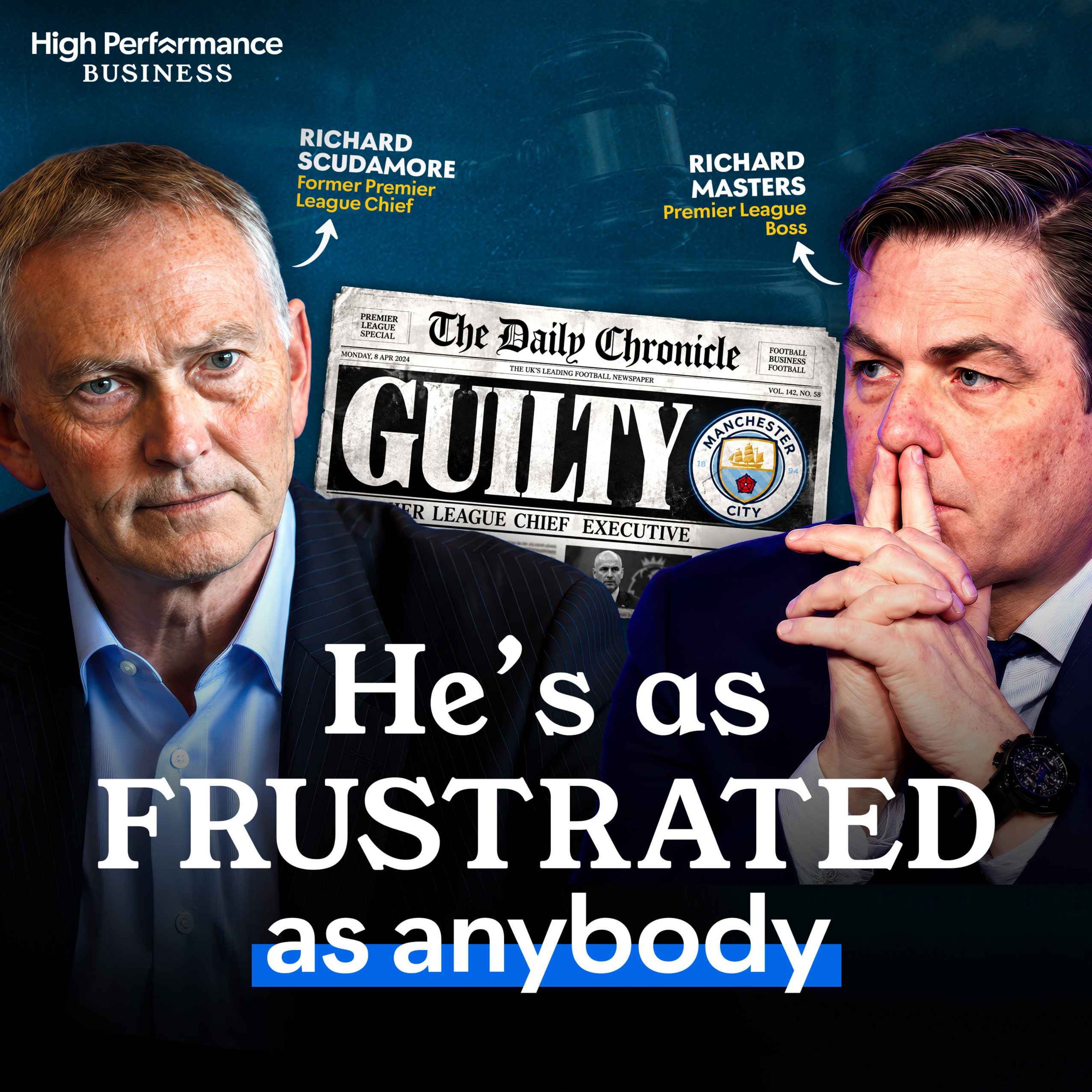
08:46world because you know you just meet footballers and you know you just go to matches and there are just now right now you know the the whether it was me or now richard masters there's always challenges and i'm i don't i don't sit thinking oh god i'm glad that wasn't me i you know you just because it's not it's not what you think can you believe it's been going this long though no i can't believe it neither can anybody but then neither can richard masters either you know so so he's as frustrated believe you me he is as frustrated as anybody and at some point and And that's why, in fairness to him, he does his faithful pre-season media a few weeks back. He says, I can't say anything because I don't know anything.
09:22And when I do, everybody will know. And that is genuinely how it is. He's as frustrated as anyone. We've just had another record-breaking summer transfer. Then we're looking at, what, three and a half billion. Is there anything about the spending now that worries you? Do you think it's sustainable? Clearly, it's a product of, yeah, like all things. Like how much mortgage can somebody have is a product of how much they earn and what the interest rates are and everything else. And so the transfer fees are a product of what income they think is – what income they have, what they guarantee to have and what they think is – they might have in the future. And the great bit about the way the Premier League is set up, everything is pretty much rolling three years in advance. So, you know, they know what they're... I mean, it's very easy to predict revenues in the Premier League because of the way the TV deals are done. Very little default. There's been hardly any. And then you know what your season ticket revenues are. It's a pretty easy model to write the revenue. It's a very... therefore, it's very easy...
Transfer spending and sustainability
10:26to work out what you can spend. And there are all sorts of people out there because of those two factors, particularly the certainty of revenue, that are prepared to advance you or use that money. So I say worry is not the word, right? But of course, what you have to do, all sport has to keep to the fundamentals of being able to ultimately pay, you know, pay the obligations that you've put the club under. touchwood touchwood the primary clubs have been able to do that but even uefa recently have come out with a report that says you know they're they're concerned they're concerned that some clubs are reliant on how much they're going to eventually sell these players for in the future and that kind of brings us on to financial fair play as well because it's all been changed this year um firstly do you
Financial fair play and wage caps
11:19see why UEFA are worried? Can you understand why they're sort of noting a word of caution? This notion of financial fair play started in UEFA and... It's very hard to know what the true motivation was. Was it? I still don't know the answer to this question. Was it genuine motivation? a concern for the sustainability and the longevity of clubs? Or was it, and there's a lot of pressure on this, another European scheme egged on by the jealous to peg the Premier League back? Because that is still real today. And it was as real when financial fair play came in, it was fundamentally UEFA wanted nobody to be able to spend money more than their revenue. That was it. And around our table, the Manchester United and the Arsenal's were all for it because they had the biggest revenues. And so UEFA have always been out there. And I think they would dearly have loved from the beginning, here's your income, here's what you can spend. No loss, no owner equity, no injection of capital.
12:35latterly you know sovereign wealth fund please dump all your cash into our club so that we can you know we can take on the rest it's always been the nature of european football so look uefa have a great role to play because of course they've got that fun there's fantastic competitions and so they're they're right to express their opinion but i don't see it quite in the same concerning uh way um not in the same way okay so obviously we've got these new financial fair
13:05go over them again because they're, you know, complicated. Um, I think broadly they were brought in in an attempt to level the playing field. We can argue that on another day. I think we might. Yeah, a lot of critics think it has changed. sort of shorn up the position of the bigger clubs? Where do you stand on it? Well, the one thing that's hard to defend... and therefore I think needs looking at, is... The absolute unfettered, uncapped amount of money spent on player wages and costs. And therefore, if you like, Fair Play, which was UEFA's, not the Premier League's, the Premier League has obviously PSR, which was a different calculation, because we insisted on there being some allowance quite a lot, really, when I was there. And it's the same now. There was an allowance for clubs to be able to spend and inject capital and inject equity to get them closer to those that had higher revenues. Otherwise, you just lock the table in, wouldn't you, from one to 20, you may as well.
14:13I think... So I don't have a problem with the idea that is there a way of at least putting some dampener on that wage bill that the clubs run. And that's a very – that's a different part of the economics than transfer fees and everything else because that money goes circulating round as you've seen. So the relationship between costs of a playing squad in terms of its salary costs and its own costs and its agents' fees and everything else, I don't think there's any real problem with putting some limit. It's not a hard cap as such because it's related as a percentage of income. I don't think there's any problem with that. But people add it all up and make it one and the same problem. Transfer fees, to me, is very different because those transfer fees are going somewhere else. When you pay those transfer fees, I mean, there was more. The interesting stat, I haven't got the precise number, but it was the highest ever recirculation within the Premier League this summer as well,
15:14within the league, which is again, and down into the championship and down into the EFL. So I think it's a different thing. I'm not... I look from a distance. I'm not intimately involved. I don't look at every club's details. But I think some sort of cap to stop the wage bill going right through the roof uncapped, I think is a good idea. And the squad cost ratios get you there. That's really interesting because obviously they have a wage cap in leagues such as MLS. Mm-hmm. But would that not be an immediate sort of restriction of trade? The Premier League's become huge. How do you then attract the big players if you are saying to them, actually, you can't earn Harling's level? Sound like a union leader. In another life, maybe, Richard. Can you imagine Natalie Perks, union leader? She could do it. Yeah, I know you could. Oh, no doubt you could do it. Look, is it a restraint of trade? We're talking about the aggregate. We're not talking about, it's not an individual wage cap, is it?
16:13300, 400 million. Are you really saying that that stops a club from signing any player, really? I mean, it's really the way you divide your deck, isn't it? Yeah. Maybe I'm sort of thinking more. If you are, let's say... Manchester City and you want to attract the absolute best players which of course they do if you've only and I'm using uh rabbit you know rabbit ears here um if you've only got 400 million you've got to then go right we want Haaland we want xyz and how much we're going to pay them it's that's a jigsaw that's a of course but then they've got too many players anyway haven't they all I'm saying is all I'm saying is there is no There is no real reason why if you really wanted a particular player, you couldn't find room for them in your squad. And it's still, I go back to something I said earlier, there's still only 11 on the field at any one time. So if what you're saying is, can they just hoard and have, you know, 25 of the world's top 30 players?
17:09No, they can't. But then is that wrong, really? You know, I don't see where there's... It's absolutely wrong. There is nothing under the current rules that stops a club that's got a good plan, a good recruitment plan. And remember, people talk about player, you know, player recruitment. It's not recruitment anymore. It's player trading. You know, you are... There's a dynamism to your squad these days that is, OK, you know, this is our squad. This is what we've got. This is what we'd like. Who are we exiting now? to up the quality of our squad. And so that's how it works. And so I don't see it's really a restraint. I never thought I would sit here and hear you effectively argue, sort of, it sounds like what you're doing, for a wage cap in the Premier League. If it gets to a level where it is completely ludicrous, like, you know, the strength of the Premier League and the way it divides its central revenue, where the, you know, I don't know what the numbers are, but the top clubs probably now from the central distribution are probably getting somewhere near 200 million.
18:07smallest club. People talk about this, they get 100 million when they go down. No, they don't. No, they do. They get 100, 110 million for being in, right? They will get about 110, 120 million. And that... The point of that, that ratio, that 1.82 to 1, whatever the ratio is, top to bottom... Guess what it does? It allows the bottom teams to put a squad out that gives them a chance of taking points off... the top teams and that's what everybody wants the biggest jaw i've had since I left, is looking at the league table with all the bees up there. You know, the Bournemouth, the Brighton's, the Brentford's, you know, because when you look at the league table now, when you look at the league table last year, the way it ended.
18:47There's names up there. You think, how can they be there? And are you... also saying this with another B cap on, because of course, with Bristol City, you're on the board of directors, you know, you want to eventually become a Premier League side, I presume, and coming up into a world where they're Maybe aren't. you know, unfettered wages, which are just going out of control, maybe a world where they are a bit more control. That would benefit you, wouldn't it? I don't know. I don't sit around that table necessarily looking at things through, you know, through through the through the same lens as everybody, even in the championship. You know, I'm talking about I think. I don't want to make a bigger issue than there must be a number, a very big number, beyond which you don't need for a wage bill to put together a fantastic Premier League team. And of course, the other aspect of this, we mustn't forget, it's not just putting together a brilliant Premier League team. It's putting together a Premier League team that then goes on and competes and does well in Europe. And that's the difference between the Premier League and many other sports, between many other things, because the Premier League isn't necessarily the end to itself.
Who regulates football
19:55You're building a system that allows the biggest club. to go on and succeed in Europe. And that's part of the model, always has been. So you've got nearly three I's, don't you? You've got one eye on what's good for the league. You've got one eye on what's good for the whole of football, because it's still part of an ecosystem. And you've got one eye on what's good for the clubs that then go on into Europe. And you have to, that's the trick. Let's talk a bit about... Who regulates football? Because you were always very clear. You believed self-regulation is the best form of regulation. Do you still believe that now? Self-regulation... The way you said it even sounds like it's some sort of way you just do it yourself. But let's go first of all, number one, law of the land.
20:42So everybody has to abide by the laws of the land. And there's lots of things around finance, around money, around accounts and accounting. You know, the law of the land comes first. And then up until most of the time I was there, the law of Europe and the ECJ and everything else came first and second. Right. So and so that's not quite the same now. And then you have the FIFA statutes and what they they decreed had to happen. Then you have the FA statutes. And so the league themselves really was a trade association rule book between how the 20 were going to behave towards each other. And therefore, I always believe, and I believe to this day, there is enough regulation. We know where you stand on an independent football regulator. They are here. We're going to hear of their state of the game report fairly soon. I guess for a lot of people, it was the fans' point of view and how fans felt like they were being maybe priced out of their football club. Or it was sort of getting out of control. We saw teams going bust, all these kind of things, which is why it was essentially brought in. Do you think it's...
The independent regulator and fans
21:46more something that should regulate championship and below and therefore not the premier league do you think they they more or less no i wouldn't no no no but even in your question you know clubs going we've seen clubs going bust you know they don't very few do and very few have finances are a problem though in football the truth is clubs do not go bust what's the definition of professional football you either you pay to play and people pay to watch there's no other definition really and so since 1888 play by local business owners or factories or whatever and people have come in and paid a little bit of money to watch and so what's happened it's amazing how many people have been found to keep those clubs alive right and on occasion though they get to a point where through mismanagement bad management or bad luck you know a ball can hit a post and you know in this game and come back out and a ball hits a post goes in your life is different right life is different so
22:49So, management and mismanagement to luck and bad luck, because it's a massive part of football, because it's a low-scoring game. 0-0 is very similar to 0-1. It's very similar to 1-0, isn't it? And what a difference your life makes. You're either in the Champions League or not. You're either relegated, promoted, Premier League or not. You're either in business or not in business. That's kind of why we love it as well. Exactly. And so that gets to my... By point.
23:15Acast powers the world's best podcasts. Here's a show we recommend. Hey guys, it's Nylea Devorah and Justice Price. We host the show Ease, where we sit down with thought leaders, experts, and creatives and ask them all the questions we've been curious about. We talk about everything from people and culture to the science behind why we think and feel the way we do. We don't take things too seriously and know it's okay to not know all the answers. We hope you enjoy these conversations as much as we enjoy having them. You can listen anywhere you get your podcasts or watch our conversations on YouTube. Come learn with us and hopefully we can find some ease along the way. Acast helps creators launch, grow, and monetize their podcasts everywhere.
24:01. Thank you. Ever since time began, it's been a speculative business and people take risks. And I do understand, listen, I'm sitting here complacent, because the only club that really, really matters to me has been owned by a billionaire for the last 26 years. It's quite handy. Who has put a shed load of money in and kept us in business for those 26 years. And there's not a single Bristol City fan who wakes up in the morning worrying about the existence of their club. You know, they worry about other things and they're never satisfied. They'd like to see us in the Premier League and all that stuff. I get all that, but there's really no fundamental worry. That is the game, though. The game is you find the money you can, you put those resources against it, and some people take risks, just like Peter Risdale back in the 2000s with Leeds, took a risk, got them to the Champions League.
24:55you know, stick or twist, if you'd have asked the 36,500 Leeds fans at Ellen Road that night to stick or twist, you know the answer to that question. Twist, back at the farm, come on, you know, and it jeopardises, ultimately it jeopardises the club. What is the job of the regulator beyond that? If the idea that the leagues, both the Premier League when I was there, the Premier League now, the EFL, under the guidance of Trevor and Rick Parry, they are every day concerned in the sustainability and the viability of those clubs. It's the most important thing. It's a bit like when you get on a plane. I know we all sort of dismiss it. When the pilot says, you know, your safety is our number one priority, everybody goes, oh, yeah, right, come on, get on, get on with the food or get on with them, get the Wi-Fi going. But you just wash it over you. But actually, when you actually logically think about it.
25:49That is their number one priority. And when you run a league, your number one priority is the sustainability and the continued existence of football clubs. So nobody's going to do anything to jeopardise them. I guess that a lot of people as fans will feel like the independent regulator's job is to protect them. And we've seen a lot of fans protest, certainly about ticket prices. You said, you know, a fan comes along and pays a little bit to watch a football match. I don't think they're paying a little bit to watch football now. And maybe that's a role that, you know, does a football club have to do more for its fans? What bit? There's not an intimate understanding of what currently exists within the rules, right? So what is it about their club
26:33that they really, really want protecting because ground location is protected by rule. You know, club assets, club badges and, you know, is protected by rule. What the regulator is not going to do, it's not like Ofcom or Ofgen or Ofort. They're not going to come in and regulate the prices of what it costs to go to a Premier League football game or a championship game. It's just not within the remit. It's just so, you know, the things that really matter. to fans, right, are pretty heavily regulated. The things that irritate fans, and I get it, you know, displacement of football matches, why can't, you know, the timing of kickoffs and the notice of kickoff times and all those things and ticket pricing per se, you know, I'm afraid the regulator is not going to, you know, I don't want to set expectations too high for David Cogan, who I know well, but, you know, you've got to be careful. This isn't going to be the panacea for everything.
27:29in dreamland from a football environment, it's not going to be. The main objective of the regulator is to ensure sustainability of a football club. Let me put you a different scenario. Let's say the regulator came along and said... Thank you. Right, all 92 of you that currently exist, we're going to guarantee sustainability. But... Not a single one of you is allowed to invest a penny to improve your team.
28:04And I can put my fan hat on here. They take sustainability as a given. My club will always exist. What I really want my club to do is to improve its position, wherever you are in the league. And so that's why it's hard, because fandom have an unrealistic... I mean, they don't really want sustainability. We could put rules in tomorrow. The leagues could have put rules in 10, 20 years ago to say there is no way that this club can ever, you know, ever be put at risk. But in so doing, you'd have to say, take no speculation, you can make no investment because what the fans really want is the really want is their club to be a little bit higher up the league than they were. Or in Europe next season. And whilst that exists, whilst that tension exists, that's ultimately the tension. And there is a tension, isn't there? Yeah, yeah.
28:52uh An owner comes in, say you're a private equity firm and you're buying up a Premier League club. Commercialisation of football means that you can see there's an amount of money that you could start to make more than what the club currently is making. And I guess that's where the tension comes in with fans. English football generally, every single fan... is attending a subsidized event. subsidised by an owner often, right? I mean, that's the truth of it. If that sounds a bit harsh... All of us that go to Bristol City every week are having a subsidised event. It's a nicer stadium and it's a bigger wage bill and it's a bigger squad than we are prepared to pay from our pockets. So we've established you're not a big fan of an independent regulator. Is that fair? No, in fairness, in fairness, if it focuses minds and gets people thinking about things.
European Super League
29:53I've read the brief I read everything I just still don't know quite what it's there to do because people or even now are obsessing about it backstop powers to try and arrange some foursome settlement between the two leagues. But English football needs to do that for itself. There was that huge moment in 2021 where the six big teams wanted to break away and join the European Super League. Take us back to that time. I was on record for the weeks and months before when it was brewing of telling people, whoever rang me and said, what do you think? I said, it's never going to happen. Can't happen. And they go, well, why can't it happen? I said, well, first of all, I mean, these clubs would have to leave the, the English clubs would have to leave the Premier League. Then they'd have to leave the Champions League. And then, you know, they wouldn't be, then there'd be sanctions, you know, across the game. The rule book, there's nothing within the rules that allows them to go. So, and that's, I said, on a sort of a legal basis, in my view.
30:49find out i said that'll stop it in its tracks and they'll be well yeah but it's already somebody was saying you know people were saying to me oh yes but you know jp morgan have already done this this and this i said jp morgan can do what they want i'm telling you they haven't met they haven't met a fan base you know head on this this plan hasn't even met its first level of resistance yet i said so i don't think and so you you couch this as you know under self-regulation the super
31:19You know, despite... I spoke to all the clubs and I told them, it can't happen. Don't do it. It can't happen. Bad for your reputation. It can't happen. But they persisted because they didn't want to be left out. They thought if everybody else in Europe was going to do it, they needed to be part of it. It's not a real reason, but it's kind of a reason. But it was never going to happen. Was that the best sort of example of fan power, where fans really did? Because within 48 hours, that was dead in the water once the fans got involved. It was dead because the Premier League, the institutions, government, Boris Johnson, It was just like it was never going to happen. It was just never going to happen. It couldn't happen because it was a complete rip-up of what...
31:59really, domestic league football is all about. You can talk about football all day, every day. The unit, the real unit of football is a club, and the real cake is... is domestic league football and everything else is icing and cherries whether that's you know european competition or the cherry of the maybe the you know the the fa cup or the cherry of the club world championship who knows but but the cake has always been domestic football and that's never going to be ripped up when you were there you had a strong opinion about janny and fantino i did yeah uh the club world cup was a particular tension point um What did you make of what happened after the World Cup with his plan to try and sell it off? What did you think of that?
FIFA and Gianni Infantino
32:48I was first very offended by the red card rescinding for... Flo Balogun, yeah. The idea that, you know, Donald Trump, if he did or he didn't, who knows, and Infantino suddenly think it's a good idea to rescind a red card. It's just that, to me, was more shocking than what came after. Because what came after is just another, you know, it's another idea that gets run up the flagpole. It's probably got no chance of succeeding. But I thought the red card goes right to the heart of the sport. Well, the sport. What is the sport? The sport is, you play by the sport, those are the rules of the game. The FA and UEFA have been pretty clear on how they feel about Infantino. Do you think football deserves better? Do you think it needs a different person at the helm? So I never in my 20 years walked around thinking or walked into a club where I thought they're being nice to me because they think I'm going to leave some money behind because I had no influence on it.
33:45the only influence i had was outside was putting the money into the top of the hopper and then of course i had some influence in them the way we set the rules as to how it was divided but it was it was not a specific club it was just you know the whole the whole the whole way the rules set it compare and contrast that with fifa Just the idea that somebody can go on a campaign trail and say, if you vote for me, I'll give you all three million. That's how he got the job in 2016. Or the way he gets red carpeted when he goes places because, hey, you know, be nice if you could leave. You know, as the private jet leaves, it'd be nice if you could drop a bag of a couple of minutes out the back door. The way FIFA don't have any real precision around the way the money's handed out.
34:33spend in the presidency and i think it makes for that's the bit that i would change the most is an agreed all the national associations however many there are now 213 of them sitting around in it you know having a proper go rules as to how the money gets divided then of course when you've got rules about how the money's divided there's less of an issue about you know you're then freer to go and you know commercialize and do things at the top because at least people can see where it's going. When you were at the Premier League, you... were quite vocal about wanting that 39th it was called the 39th game abroad and it's worked really well in places like nfl often come over and have games here where do you stand on it now do you still feel it's something they should do
The 39th game abroad
35:20It was an idea, you've got to remember when it was, it was 2007-2008, and there was some doubt as to whether media rights would continue to grow and whether international rights would continue to grow, absent of actually going and visiting, right? As it turns out now, there was no need to go play those games abroad. The revenues now internationally for the Premier League are larger than the domestic revenues,
35:50but that's partly to do with the commitment of broadcasters and the commitment to broadcasters not just the volume but the quality of the broadcast and the advent of 4k high definition television and so you know you can now quite easily sit at home on a very nice large screen 4k tv and get a pretty decent experience in the way the broadcasters but you know the way nbc have gone
36:20australia you go to asia you go to all these places hong kong singapore it looks fantastic and therefore the premier league has continued over the last 20 years to look fantastic on television and that's a combination of better quality production better quality of tv sets um and just so so the need to feel like you know in order to you know continue to grow internationally was i'm not so sure you need to go and play the games there anymore Another thing about fans is their thoughts on VAR. Now, you are obviously a fan of a club that doesn't have to deal with it. How much nicer is it to watch championship football when you're not having to look at VAR or worry about VAR? Well, I never look. If I go to a Premier League game, I don't sit there with the same absolute avid interest when the goal goes, when the ball goes in. Right. So I don't get you know, I'm not leaping out of my seat at a Premier League game like I am at a championship game.
VAR and referees
37:18used to do you know i've always done look straight at the linesman if there's no flag you're going for it we're still going for it we're losing hats and you know we're hugging our neighbors and i'm looking down because my kids all sit in season tickets a few rows about 12 rows over a block and we're like yeah but you know so it is great um so uh that's still fantastic you just look at the linesman's flag sorry assistant referees flag see how old i am yes assistant referees flag and But, you know, that's not to say I'm not, you know, you can't be a fan of VAR, can you? VAR was, you know, VAR was a response to the pressure of clubs wanting to get decisions more right. Or writer, I don't know what it is, more right, probably. And that's, you know, and the pressure of media and the pressure of fans. Everybody wanted to get more decisions right. And it does get more decisions right.
38:13The problem is those that become arguable are even more emotive. But there's no doubt they have made more right decisions as a result of that. And this is the thing. I guess it's taken some of the joy away in the Premier League, I think. Don't know. I don't know. I'm not a fan of a Premier League. You do know because you just said that you don't celebrate a goal yet in the Premier League. No, I don't ever celebrate a goal when I'm watching because I'm not supporting any of the teams. You know what you just said. 25 years, privileged enough to be invited to Premier League games, and I sit there and I spot as a neutral. I've never been to a Premier League game wanting one side to win more than another. Really? Never. I'm hoping that to change next year or the year after when Ashton Gate hosts its first Premier League game. If you watch an absolute screamer go top bins in the Premier League and you want to go, oh, turn to your friend next to you and go, what a goal. I just want the referees to come out of the game all right. Because when you're there as a neutral,
39:13thought if if a ceo of the premier league when i was there if you can't if the institutions can't support the referees who can right because it's the toughest job and believe you me a game without one is not a game at all right and they've got a tough job and i always used every game i was at i just wanted the referees to come out okay you were a qualified referee i was back in the day back in the day back in the day yeah back in the day when you could would you have wanted var i
39:43I don't know what it's like to run out at Anfield or Old Trafford and take the pressure of that. It's a lot of pressure. It's a lot of pressure. The refs talk about that pressure. Look, all I know is the referees wanted the help because they too want to get it right. They wanted the help. In my time at the Premier League, the clubs generally were huge. supportive and some of the people that you might not necessarily think were you know particularly warm and cuddly and would would be very supportive of referees one final thing um one thing that the prime minister has talked about is um drinking yeah at football matches um i think it's discriminatory of of football fans that they can't drink in view of the pitch now it's worked in
Drinking at football
40:24in trials in women's football in some stadiums, different products. You're looking at me like I'm mental for asking you this question. It's current. I know what you're asking. Yeah. What do you think? Well, I don't think it was helpful that Andy Burnham used the word discriminatory. In the early 80s, Margaret Thatcher didn't want any fans to be, you know, way fans at matches. The Hooghulism was shocking. And in 1986, not a single match was broadcast on television. programme and people have to remember these were different times. 40 years ago. So all that Mr Burnham needed to say and I think is is Maybe it's time for the people whose job it is to keep these grounds safe and to keep the consumer product as good as it is now to sit around and let's have a discussion about it. I guess the police need to be involved with this conversation, don't they? Of course. Safe what? Police and safety officers, people who run clubs, right?
41:20But the trouble is you can't prove an unknown, can you? You know, it's very hard, very hard, all these things. You know, what if we did this, what if we did that? But it comes down to me, to the consumer experience. All I would say, I've been privileged and lucky enough to be invited to go to Twickenham quite a lot over the last 20 years. And that's become quite, that is not good. Are you telling me that you've never snuck a cider into a coffee cup and sat in the director's box? No, but I would say this.
41:50every match does slip a little brandy into a hot chocolate at halftime she is someone that would be my friend she's everybody's friend she's marvelous Richard thank you I actually could talk to you for days um I know you don't want that but I could thank you so much for coming on hopefully you can come on again uh now when it comes to you as fans we don't want you sitting on the sidelines we are bringing fans off the bench which is a short segment at the end of every show where we bring you the show. We want the stories that you normally tell your mates after match day or race day, the great calls, the questionable decisions, and the stories that you'll never live down, the moments that made you fall in love with sport in the first place. You can DM us at highperformance.business on Instagram. And I've got one this week where I'm
42:40I was at a football club teaching some wonderful academy scholars how to deal with us, the media. And well, let's just say it made me feel incredibly old. One of them at the end asked me about the time I interviewed Kylian Mbappe. Right. And he said to me, quote... is he faster than the cars? Does that mean anything to you? No. You're looking as confused as I did. Yeah. And so I said, I'm sorry, what now? And he said, is he faster than the cars? And it, I genuinely had no idea what he meant. I am chronically online. I would count myself as someone that's often on Instagram. I had literally no idea. It's a meme. It's a Martin Brundle thing that Mbappe got asked at a Grand Prix. I had no idea. And I felt like this small and this old, like I had some Twinset and Pearls. I was the oldest person ever. There was you thinking you had cred. Exactly. I walked in there feeling all right about myself.
43:40so that's my story for the week yeah that's not the worst thing that could happen to you no it's not no there's been far worse in 25 years in football yeah we'll leave it there all right
43:55you