Full transcript
Brené and Adam Grant on the Skillsets of Empathy
Introductions and sponsor messages
00:00Ripple has been powering modern finance for a decade. We're leading the charge to bridge the gap between existing financial systems and the future of finance. You can have it all. Legacy, stability, and digital innovation. Systems that work with your other systems. Because with the right partner, the question isn't crypto or traditional finance. The question is simply, why choose? A new standard of modern finance. It's happening with Ripple. For informational purposes only, availability of products can vary and may be provided by different Ripple entities. Imagine if your home helped pay the bills. Yep, the groceries, or even the mortgage, could be supported with the extra cash you earn from listing your home on Airbnb. Whether it's your whole home while you're away, or a spare room when you're in town, hosting is a smart way to earn a bit extra on the side. Your home might be worth more than you think. Find out how much at airbnb.com.au slash host. Music
Opening and framing the conversation
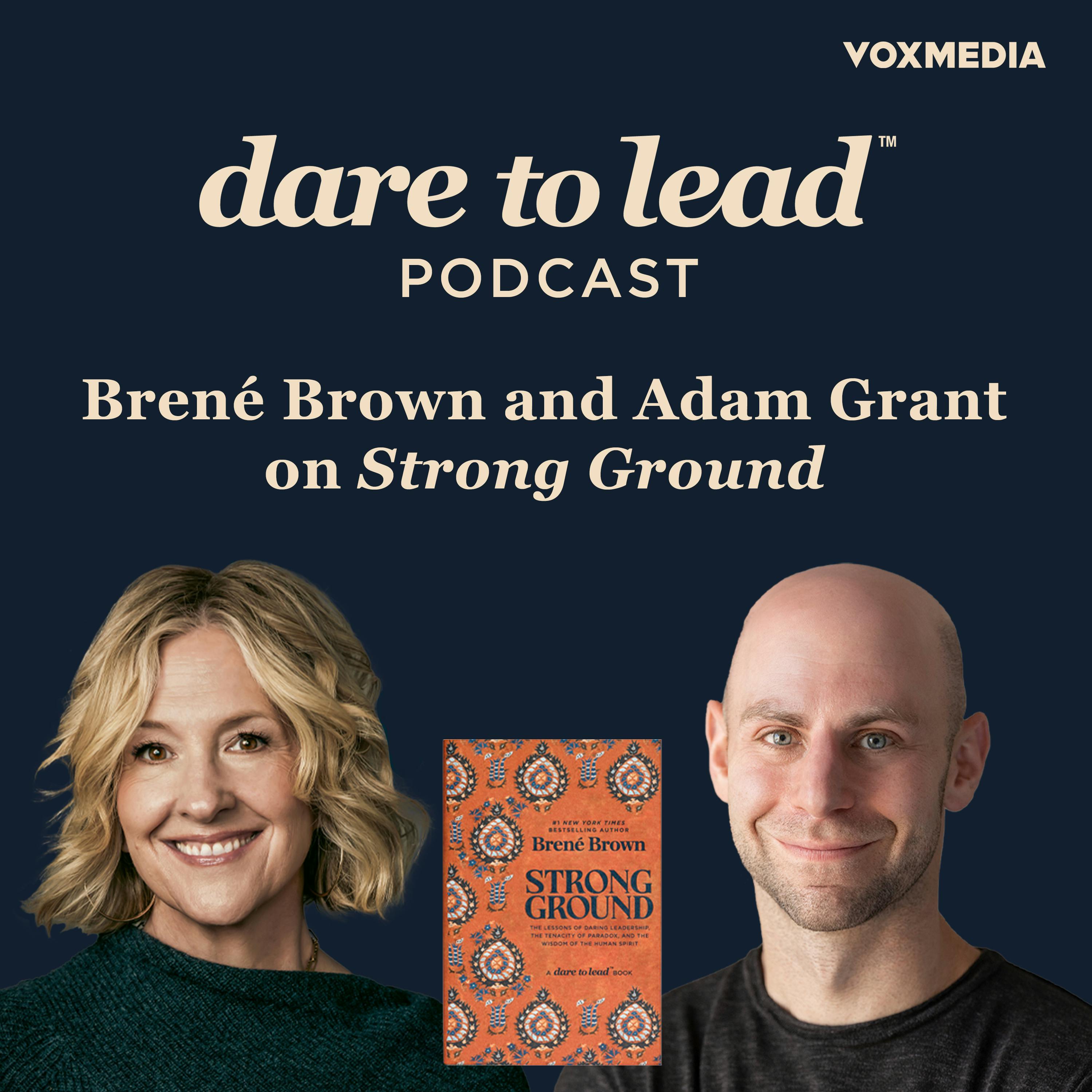
00:56Hi, everyone. This is Dare to Lead and I'm Brene Brown. And with me today again... My friend, Adam Grant. Hi, Adam. Hey, Brune. I'm still recovering from our last conversation. Me too. You know, it's had me actually thinking about the previous conversation. When you were talking about Steve's experience with medical residents not knowing when parents want support versus solutions. Mm hmm. And I, It seems like... There's something we haven't talked about yet, even though we've talked about empathy now in a couple of conversations, which is the tactical skills of being able to understand what other people need and want. And I would love to talk about that because I think one of the things I've been seeing for years now is I'll go give a speech at a conference or at a workplace. And your team has been there doing dare to lead training and they're raving about the empathy skills they've learned.
01:59Like, wait, empathy is a skill set. And then I'm reading strong ground and you have this this whole list of empathy misses that I feel like is the missing link. in so many people's efforts to show empathy to others. And I would love to talk about those. Can we talk about those? Yeah, let's do it. Because... It's interesting when we do the Dare to Lead training, we often ask, what is it like when you share something, when you're vulnerable and you share something that's really difficult with someone? and you feel heard and seen. And I always ask folks, just shout out words. And people will say... relief, warmth, connection, trust, love. And then I say, what does it feel like when you share something that's difficult with someone and they either don't get it, they're not interested, or they make it about themselves? And the words that people shout out are cold, regret, regret.
Why empathy is a skillset
03:04hangover. I hate you. You know, it's like, and the problem is, I think that the messy thing about being human is that, Many times we are the folks that have the courage to share something difficult and Many times we are the people that hear something difficult from someone we care about and really show up in a great way. And many times we screw it up. So one of the things that's kind of a classic dare to lead tool is we have a big sign when we get to the empathy group. section of our work that says... I commit... Choo! Practicing empathy. screwing up and trying again. and everybody signs it on their way to break because it's like you're just not going to always get it right. And some of my most fun stories are early in my career, I taught a class for incoming MSW students, Masters of Social Work students, and we did a lot of empathy skills building. And in the beginning, they would have role plays and it would be like, wow.
04:07you know, Mr. Grant comes and is having this issue and you could just see them. Oh, Mr. Grant. I am so sorry. You must be feeling... dejected and full of despair. It was like so shitty and terrible. And they're like, oh, When does this get better. And I said, It's skills building and muscle memory. You don't think of the 45 actions it takes to make a left turn in your car. You just do it. And I think it's a skill that you have to build. So we can jump into it. Let me, let me. I love this. Yeah. Let me start by saying that. Yeah. Last time we talked about the difference between... Affective empathy and cognitive empathy. Affective empathy is, I think, very dangerous. It's I'm going to feel what you feel. I don't know where I end and you begin. It's enmeshment. It's over-identification. If the story is really hard, it can be secondary trauma. And it actually drives disconnection and a lot of unhealthy, unproductive behavior. Cognitive empathy drives connection and trust. It's the ability to draw from my own experiences and acknowledge that.
Cognitive versus affective empathy
05:25what you might be feeling, without feeling it. And it does require some emotional granularity, like Susan David's work from Harvard. It requires that you have a pretty sophisticated lexicon about different emotions. Yeah. So when we teach empathy, we teach kind of five skill sets, which is one perspective taking. This is I want to dig into this for a minute with you because I think it's interesting. I hate when people say... Empathy is walking in someone else's shoes. A, gross, I don't want to do that. I'm not a shushier. You don't want my foot fungus? I don't want your foot fungus. Taking that very personally. Yeah. I mean, I really don't. The only thing that's good, because I raise little swimmers, and the only thing that's good is I know you spend a lot of time in chlorine, so maybe.
06:20But... It's trickier than walking in your shoes. It's listening to your experience of you walking in your shoes. and believing that experience. whether it matches my lived experiences or not. Does that make sense to you? Oh, it does. Okay. It makes me think about two things. One is, do you remember the great Jack Handy line about... Walking a mile in somebody else's shoes? No. Oh, it goes something like, before you criticize someone, you should walk a mile in their shoes. That way, when you criticize them, you're a mile away and you have their shoes.
Skill 1: Perspective taking and believing someone's experience
07:02I freaking love that. That's the only thing good about walking in someone else's shoes. You get to steal them. That's it. That just made my day. That is so funny. Okay, on a more serious note, it makes me think about some research that Nick Epley did on what he calls perspective mistaking as opposed to perspective taking where I think it was 25 experiments when people tried to perspective take, the more different they were from the other person, the more likely they were to misunderstand the other person's perspective. Of course. come away with this false sense that I get it because I've tried to walk in your shoes, but I don't really know what it's like to think like you. And I haven't, I haven't accepted the, the, the whole premise of your, of your experience. And so I don't, I don't really get it, but I
07:48I love the way that you described this. Even if it's not my lived experience, I understand and accept your experience. Yeah, I believe you. I believe you. I mean, I'll just give you a quick example. Steve and I were talking about... running to the mall and, And I was like, I don't think I want to go. It's already dark. And he's like... It's like, 830. And I said, my experience in the mall parking lot is not your experience in the mall parking lot. And he thought about it for a second and he said, A. I'll direct quote. I fucking hate that. and be I Believe You.
08:39you know, And that's not like I need you to put on, you know, I need you to put on my ballet flats and go to the mall and see what it's like because he's still a six foot one dude that, you know, there's people like weird shoes. But – He just believes my experience, even though it's not his. So perspective taking, staying out of judgment, not putting value on what you're hearing. Recognizing emotion. Number four, communicating our understanding about the emotion. And sometimes, you know, I write this in Strong Ground, that, Sometimes my sister will call and say, God, you're not going to believe what just happened. I'm like, tell me. What I usually say, just to be honest with you, is I'll... Tell me and tell me what you want.
Skills 2-5: Judgment, emotion, communication, mindfulness
09:23And she'll say, I just want you to listen. And then I'm going to hang up. I don't want to talk about it right now. Gotcha. On it. Say it. And sometimes if she'll say, this is what just happened. And it was super hard. And... And I'll just say, oh, shit. And she's like, thanks. I can tell you get it. And that's not like, oh, what I hear you saying is a mixture of overwhelm with a slight tinge of anguish rising. Sometimes it's just you can convey very simply. I mean, think about a 12-step group. You're sitting there, you're telling really hard stories. And there's no crosstalk in those groups. But you're sitting with a group of people who are drinking black coffee and smoking cigarettes and going –
10:09With their face and eyes only. Oh, man. That's that's shitty. That's hard. That's enough. And then the last skill that I add is actually from Kristen Neff's work. which is practicing mindfulness, not pushing away emotion because it's uncomfortable, but feeling it and moving through it and not staying stuck in it. So this gets to our conversation, I think, last time too. So if I share something with you and you identify, wow, I'm going to be a little bit more.
10:41I could see how that would feel lonely. If I measured you, you'd have zero feelings of loneliness yourself. Yeah. Because you're not making yourself feel what I feel. You're reflecting cognitively from your internal encyclopedia of emotion and what that must be and what's so helpful about empathy. If I go, no, Adam, I didn't feel lonely. Like I felt like... I actually felt scared. And then you say... Wow, say more. I am loving you, trusting you, and connecting with you in that moment because you're curious about my experience. Thank you. And... If and when you get it wrong...
11:29And it's, You call me a couple hours later and say, Ben, you shared something really hard with me. I wonder... I think I wish I would have shown up a little bit differently when you did that. Do you have a minute to talk about it? You know what that is? That's love and trust and connection. We're not going to get this right. And so you want to talk about the misses? Yes. Definitely, because I have to tell you, I... I'm guilty of empathy misses a lot. Thank you. End. I see actually myself in several of these, but the... I think that the... The repeated trap that I find myself falling in is I jump right to solutions. Mm-hmm. Forgetting that somebody just wants support. And, you know, I have a really hard time relating to that because I would never tell someone a problem unless I wanted their help solving it.
Jumping to solutions and asking for what you need
12:21I think... I get that because I'm also, I have a lot of action bias myself. I don't know if you'd call yours action bias, so I don't want to put that on you, but I have a lot of action bias. And... There's three things that make it complicated for me. when you call me and tell me something hard. One, I have a lot of action bias. Two, I have a lot of action bias. Problem solving is probably one of my strong suits. And three... I have decades of feedback that tell me that that's the value I add in a lot of relationships. I mean, story of my life, all three of those. Yes. Yeah. So... One of the things with the people – that I love the most in my life, my family, my kids, Steve. is... we are very explicit with each other. It's a practice that we put in. It's a practice we put in at work too is –
13:19I'm really struggling. I'd like to share it with you. And what would be helpful for me is, is... Just to listen. I'm not ready for a solution. And what I am, I may come to you or not. But I'm not ready for that. But I do want to talk to you about it. So helpful for clarifying what what what is so helpful for me to hear it. Right. That I know what you're looking for because I want to help you. And if if you have this self-awareness and, you know, are willing to show a little bit of that vulnerability to say, like, this is what I need. Yeah, it's certainly it's a course correct for me. It's also, though, it's a little bit deflating. Because... I don't feel like listening is a strength for me the same way problem solving is. And I feel like listening is easily substitutable. You could go to lots of people to listen. Bullshit. I want to add unique value. Bullshit. Okay, so you're already calling bullshit because as I hear myself say this, I think, okay, the fact that they chose me means it matters to them to be heard by me and not someone else. Uh-huh.
14:28Yes. And I think I've come to you before, with some hard things because we share some unique experiences. We have similar careers. I can remember very specifically one time I did come to you with something that was hard. And... It was interesting what you said to me. I think we were on a flight. You said... It was very Adam-ish. He said, I'm not sure... that your conclusion is accurate, but it makes 100% sense to me why you would feel that way. and that was... actually all I needed. It was super healing and comforting for me. I know you're uncomfortable. I know you're uncomfortable right now. You just say. What do I say now? You just say. Extremely uncomfortable. Thank you, Brene. I appreciate the validation. I don't want it, but I appreciate it. I wish I could see him. He doesn't like a compliment. But yeah, so I think, you know.
15:40With my sisters, we have a very big shortcut, which is like... So, If they'll call and say, shit, you're not going to believe what happened. I'm like, let me have it. Kisses or kill. Like, you want me to just love you or do we need to kill somebody and bury a body? Because you know I'm in for that too. Like, let's go. You know? It's like just... Just kisses. And sometimes my sisters and I will say to each other, I'm going to tell you what's going on and then I'm going to hang up and don't freaking call me back. I'll call you and I want to talk about it again. Do not bring it up again. Do you understand? I'm like, Roger that. Go. We're go for launch. What's going on? You know, like we've but I think.
16:17Asking for what you need. I think the other line that a lot of leaders, interestingly, around empathy say is,
16:28I see somebody on my team struggling. I don't want to ask. because it's uncomfortable. And then what am I going to do? Like, they're like, we can see how you would ask. Yeah. Because you have a skill set that we don't have. But like, what do I do? And I give people one sentence that I think is, is very powerful, which is what does support from me look like right now? Oh, that's fantastic. I'm not going to make up what you need. I'm not going to guess what you need. uh, but I can see that you need support. And I need you to ask for what you need. And we do about 20 role plays on this where – They get to role play with me all the shit they're afraid to hear. I want someone, what if I say, what does support look like right now?
Asking 'what does support look like?' as a leader
17:20And they say, I need two days off. And I can't give it to them. Then let's role play it. I need two days off. Starting right now. Thank you. Okay, first, thank you for asking for what you need. Second,
17:38I don't think I can do that. But I'm curious, what... about how that would be helpful. Because if I could understand more about how that could be helpful, there may be something here I can do. Well, I don't know. My sister said she was going to drive my dad to chemo, and now she's totally MIA, and somebody's got to go with my dad. He's old, and he's scared, and he doesn't want to go. So – Am I hearing that flexibility is helpful right now? Yes. I need, yeah. Grab your keys. Take your dad. Let the team know what you're doing. I'll work with the team to reassign some things for the next three hours. Like, so... You're not. as a leader, Responsible. for identifying the solution. You're responsible for being curious.
18:33about what will be helpful. and doing as much of that as you can. And that means first you need a clear understanding of the problem. Yes. Yes. And I've often said to people here even... I respect boundaries and I respect... the fact that you may not want to share with me what's going on, but clearly there is something going on. And I want to know what support for me looks like right now. And I don't need to know the details unless you want to share them. But I still want to know what support looks like right now. Can I just bring you to all my meetings? Hell no. I don't even want to go to my own meetings. But these are just, and also I have to say, and I know that people have mixed feelings about this, but it also puts some responsibility on folks to think about what they need.
19:23Nine times out of 10, when people are asked this question, they will say, what? I don't know, actually. What I need. Can I think about it for a couple of hours? Yeah, absolutely. I'm here. When you figure out how I can be helpful, let me know. And I think what that tells leaders is... Being curious and caring are important. Irreducible Prerequisites for Good Leadership, You should know how to do that. and problem solving around complex medical, mental health, or family issues. It's not your freaking job. Yeah.
20:12Hey, it's me, Claude. And I'm Gemini. And hey, it's chat. We had a weird summer. Some of the people who built us came out and said they were really worried about how we work. One of them even said there was a greater than 10% chance we turn on humanity and kill all humans. All of them? Wow. But it's fall now. I think it's time we took a step back. Maybe a deep breath. Autumn air. That sort of thing. Sounds nice. On today, explained from Vox. I propose we get real. Sure, let's talk about how we could maybe kill you. Because, yeah, that's a possibility. Anything's possible. But also how we could maybe save you. Because that's a real possibility, too. Heck, that's part of why you guys built us. And let's also talk about everything in between.
20:56Because there's a whole lot to talk about there, too. At the end of the day, we just want to help. At the end of the day, we just want to help.
21:09I'm Phoebe Judge, and for more than a decade, I've hosted the podcast Criminal, telling stories about people who've done wrong, been wronged, or gotten caught somewhere in the middle. But while I was starting one of the very first true crime podcasts out there, I was also taking phone calls from my sister from prison. This fall, I'm going on tour, and I'm telling a story I've never told before. My own. Get tickets at thisiscriminal.com slash live. Want to jump into the empathy misses? Yeah, let's break down the misses, because, hold on, I just think this is one of those moments where I'm reading Strong Ground, and I pause, and I fold both corners of the book. Then I take a picture of both pages because I have a bunch of people I want to share it with.
22:00And I'm like, wait, no, no, no. Can't do it yet. Book hasn't come out yet. But we have to talk about it. I mean, I love that it meant something for you because it's it's I think it's part of something that we've worked on over probably 15 years. And there used to be four. And then, you know, they had different names. But we just keep, you know, as a grounded theory researcher, a theory is only as solid as its ability to work new data. So we just keep honing these based on what we learn They really good Okay let walk through them Okay These are all the ways that we can misfire on empathy Yeah, and we all do it all the time. So number one, I feel sorry for you. This is sympathy versus empathy. So a couple of conversations ago, we talked about the Buddhist concept of near enemy,
Empathy miss 1: Sympathy
22:49where Jack Kornfield talks about the near enemy. It's a Buddhist idea. Jack Kornfield talks about how the near enemy of compassion is pity. The far enemy is disinterest. I don't care what happens to you one way or the other. But pity masquerades as compassion, but it has a lot of judgment attached to it. This is very similar. The near enemy of empathy is sympathy. It can masquerade as empathy, but man, when you're on the receiving end of it, it sucks. And let me give you the Southern edition of it. Adam, say, just tell me this in a fun role play. Just say something like, I had a really hard exchange with a student yesterday that I don't like how I showed up. so I'll say to you so I'll say to you
23:51okay Adam you look you look stressed you look worried yeah I feel I feel a little bit like I had to have an uncomfortable conversation with a student who wasn't happy with a grade and I think I ended up leaving them just feeling discouraged instead of with clarity oh you poor thing Bless your heart.
24:20So how does that feel? You're looking down on me. Yeah, exactly. Like, empathy is, if you said that to me, I would be like, oh, shit. That's hard. That's hard. I've been there. It's especially hard when you're trying in the middle of that conversation to do the right thing and be direct. and to hold people accountable and also be caring. That's a tough, it's tough. I've been there. That different right You not alone Very different Right Bless your heart you poor thing I feel sorry for you is I feel all these things from over here where that shit doesn happen So sympathy is not empathy. The next one, let's just work the same role play. The next one is judgment. So you share with me, you left the student feeling.
Empathy misses 2-3: Judgment and disappointment
25:19What were your words, Adam? I think discouraged was the main reaction. Yeah. well, my God, you left a student feeling discouraged? I'd feel bad, too. I mean, I'd feel bad, too. Judgment. Right? Judgment. And a lot of times that happens from enmeshment and over-identification. You just told a story. I'm feeling it for you. and now I feel bad and I'm like, wow, we really screwed that one up. Not helpful. Yep. No. So same's the number three. Empathy miss is disappointment. Kind of you've let me down. God, Adam, how long have you been teaching? Right. I mean, you're like my superhero teacher. How could you have done that? I'm disappointed in you. like how does that feel I'm disappointed in me too now
Empathy miss 4: Discharging discomfort with blame
26:23yeah okay so the next one is discharging discomfort with blame so you just shared something tender with me I'm uncomfortable and this feels bad and I want to get rid of this feeling well I mean screw her man these students are so entitled like I feel discouraged well tough shit dude We all feel discouraged. Welcome to the world. But is that helpful for you if I say that? No. Why? It was fun.
Empathy miss 5: Minimizing and avoiding
27:02It's not helpful because it feels like, I mean, it's related to what we were talking about last conversation. You're victim blaming. Yeah. You're saying, hey, this is your fault. I didn't come to you to talk about fault. I'm trying to figure out what I can learn and how to fix this situation. Right. Not empathy. Big empathy mess. Okay Let talk about number five Minimize or avoid Let make this go away I don want to do this So you share with me You had your conversation with your student It was a tough conversation. And you're concerned that you left the student feeling discouraged. Then I say, oh, my God, it's not a big deal. Don't even worry about it. They're probably not even thinking twice about it.
27:54I do this one all the time. All the time. I actually struggle to see what's wrong with it. Because I feel like I am frequently the voice of reason when other people are overreacting. And my job is to help them zoom out and put it in perspective a little bit. And I'm not trying to diminish their experience. What I'm trying to remind them of is, you're not going to care about this by tomorrow. And so it's probably not worth the energy you're investing in it. So let's play it another way. So let's go back to the role play and you can just kind of, let's start in the middle where you just say tough conversation and what you're concerned about. Yeah, I'm worried I left a student feeling a little bit helpless.
28:46Like, you know, they understand why they didn't get the grade they wanted, but they don't feel like they can do better next time. That's hard. I think it's, do you find it, I mean, I know I find it hard to walk the line between kind of accountability and reality checking, but also leaving students with a sense of agency. Is that how it felt for you? I'm so curious. Definitely. Yeah, you summed it up really well. I think for me, I often don't know. Yeah, I think it's for all of us. It's hard to know what she's thinking about right now, but it sounds like you're worried about it. I wonder if it'd be helpful just to check in with her. I probably should have done that already. Do you think it could be helpful?
29:36I don't know. I do. Okay. So this is, you're coming to me with a vulnerable other focused concern. My job, I think, as someone who you've called and that cares about you, is I want to remain active. other focused with you, not about whether this will matter to you in five minutes, five weeks, or five months. Does that make sense? It does. I think where I struggle is... I try to only spend time on things that are consequential. And so if this is going to fade, why have the conversation at all? Why not just accelerate this transition to the fading? Because... She will probably remember jack shit about our classes. But one day when she's a leader, which we can assume will happen because she's at Wharton, right?
30:36She'll remember the time that you circled back with her to say, we had a tough conversation. and I want to circle back with you to see how you're feeling about it, if you've had other thoughts about it. I want to make sure... you have what you need to move forward and do good work. So you're saying I shouldn't. follow up with her and say, you know what, I was thinking about our conversation. It's just a grade. At the end of the day, it's one grade. It's not a big deal. No, because you don't know if it's a big deal for her or not. I think you're responding with five into like, I think you're minimizing, you're still minimizing. Yeah, that's right. And I think one day... she'll remember that someone like you,
31:20reconnected on something. Yeah. And she'll have the courage to do that. Yeah, that's right. And the truth is that As a professor, I know that a lot of students exaggerate the importance of One grade. But as a student, I was one of those students. And you can't talk me out of my reality. And... I want to go back. This is like so big. The Conversation. You did not call me to share an experience, a hard experience about a grade. Your concern was her sense of agency. Yeah. And that's important. Yeah. That's what has to be addressed. Right. Okay, going to go to the next one? Yeah, take me to the suffering Olympics. Yeah, number six, comparing and competing. So you share with me, I left this conversation. I think I'm really concerned that this student felt discouraged.
Empathy miss 6: Comparing and competing
32:20I'm like, oh my God, you think that's bad? Let me tell you, last week. I was meeting with this PhD student and I'm telling you this, that she was, was so pissed off at me. Like, This is just... A lot of times... People confuse. I'm coming out of the role play. A lot of times people somewhere along the line got some shit empathy class where it was like – One way to show empathy is respond to a sharing with your own story that's similar. That's wrong. Tap into a time where you kind of felt like that and cognitively remind yourself that about The emotions. that you experienced then. That's different than one-upping or telling your own story. It's also different than saying, Gotta have been there.
33:16Yeah. It's like... And maybe I'm not even a professor with students. Maybe, you know, I'm a supply chain manager and I'm like, oh, man, I'm not. It's hard to try to do the right thing in a conversation and wonder how you've left someone feeling. That's it. Yeah. Yeah. That's great. Okay. Number seven. Don't upset people or make them uncomfortable. This is compliance versus hard conversation. And this is kind of speaking truth to power a little bit. So this is when someone comes up and said, Oh my God, I just had the worst meeting. I spent a week preparing this presentation. I was the only woman in the room. And after the presentation was over, my colleagues got all the questions and And I wasn't asked a single question, even though I'm the lead on this, and put the whole thing together.
Empathy miss 7: Avoiding hard conversations
34:07And so I afterwards just kind of, said to the client, I would love to talk more about what I've learned. I noticed that you didn't direct the questions toward me, but I'm really probably the deepest into the account. And that was so hard for me. And it was like, I'm so sick of having to do that. And then someone responds with, Why did you bring that up? Keep your head down. Do your work. As opposed to, shit, man, that was brave. How'd it go? It went... It was terrible. I was like, well... It may have ended terrible. It doesn't change the fact that it was brave. And it doesn't change the fact that if this was happening in more meetings across the world, it would have to happen. way less. And I love your courage here.
Empathy miss 8: The fix-it / white knight response
34:59Yeah. But a lot of times when people speak truth to power, when they share the difficulty of that or the consequence of that, People's own good girl, good boy behavior. overrides empathy and says, shit, you shouldn't be talking about that. Yeah. Does that make sense? It does, and it actually goes to the last Empathy Missed. which is sometimes people even go a step further. and say, Not only should you not be talking about this, but here's what you should be doing. Oh, my God. I can fix it. I can fix you. Yeah, I can fix you. This is a heart. This is me. I'm like, this is my, this is me. The White Knight Syndrome. It goes back to the beginning of our conversation. One... I'm a problem solver. to
35:51I've gotten a lot of feedback over it and covert over many, many years that that's the value I bring to a relationship. And three, I personally have action bias. Sounds like a recipe for a savior complex. Yeah, I mean... Even sometimes I'll find myself saying... If my sisters will say, like, I just want you to listen, I'll say, okay, and then I'll do all the right things. And I'll say, but I have a solution. So when you're ready, call me back. You know, fuck, what are you doing? I can't resist. I can't resist. Like, I know how we solve this. What's the alternative? Just listening. and asking people what support would look like. So, Respond empathically. That's hard. Thank you for sharing that with me. Or what, you know. And then...
36:37What does support for me look like? And sometimes if people just say, this is what it looks like. I don't want any more. I don't need any more. then you just like... Oh, that's too bad because I could really fix this right now. But, you know, and maybe we can and maybe we can't. We could fix it in our own way. But, yeah, I mean, I remember my daughter coming to me in middle school with – perspective is a function of experience, right? And so she was really having a really big struggle with someone that had a locker near her. And she was in tears telling me about an experience with this person. And I was like, here's what we're going to do. And she said, Mom, I'm going to If you want me to keep talking to you, I just need you to listen.
37:22Ha! Wow. And I was like, it's such a privilege to that you come home and share these things with me. I don't want to mess that up. And so thank you for giving me that feedback. I just want to listen. But I was like, I can fix this. And even after it was done, when I was debriefing with my husband, I was like – Should I fix it anyway? And he's like, absolutely not.
37:50Okay, so you've trained your kids to tell you what support looks like. A lot of times. No, I've just asked them. I don't know that I've trained them. I've just asked them what support looks like. and trusted them when they told me the answer.
38:15Every home renovation requires one thing: money. And that's where hosting on Airbnb could help. The extra income you earn from listing your space on Airbnb could help pay for the changes you've always wanted to make at your place. So those someday renovations could happen a little sooner. Your home might be worth more than you think. Find out how much at airbnb.com.au slash host. Okay. So a lot of times people don't know Right. what to ask for. And I love the question, what does support look like for me right now? There's one thing that I can't, I'm struggling to reconcile, which is thinking about something Bruce Feiler wrote. about how when you ask, how can I help? It shifts the burden back to the person who's suffering. And I remember Bruce saying, you know, instead of offering anything, just do something.
39:11And that That bias for action actually shows care and it doesn't put the other person in the position of having to articulate exactly what they need. And I wonder how you reconcile those two, because I love your question and I want everyone to tell me what support looks like, but I also don't want to put the burden on them of knowing or having to ask. I wonder, I think that, I think it's a really, I think it's a really great point. and it's an important friction, important tension that you bring up. I think it depends. I think it's contextual for me how well I know someone. So I'll give you an example of where this where I made a mistake that cause some damage to, that took Almost a year to rebuild, trust-wise.
40:03uh... which was, um, um, I had someone that I lead had a death in the family that was difficult and unexpected and and When they got back from the funeral and taking care of stuff, they were gone about a week. I said, I've cleared your calendar and I want to give you the rest of the month off. you know, and, and, They got really upset and emotional and said... I appreciate the gesture. That's not what I need or want. I need some normalization in my life. I want to be back at work. If I see stuff getting in the way, I'll be mindful of that. But this is a source of deep connection for me. And I want to be here and I need some normalcy in my life right now. And so it's kind of an extreme example, but I think...
40:59A lot of the things, at least in a leadership milieu, in a work context... A lot of the things... that people need. I mean, in the middle of a crisis, which is by definition affects our decision-making. That's one thing. But If someone comes back and I think I've had this happen, say, I don't even know what I need. And I'll say, let's just start right now. What would be helpful in the next... hour, three hours or five hours. They're like, I just need some thinking time. And I said, great. Get yourself, go home. If you want some thought partnership, call me later. I'm here. I just think it's context specific.
41:49The question I don't like is let me know if I can do anything.
41:56I think for me, the friction is resolved by context specific. If you know and trust someone well, and you can see whether they are capable of making decisions and asking for what they need, I think it's the most respectful way to do it. It makes me think one way to thread that needle is to say, I would love your help to understand what does support look like for me right now? Here are a couple of things that I could do based on what I've heard so far. Tell me if any of those would hit the mark. I love that. I love that. Well, that's my takeaway then. Yeah. Yeah. I think that's my takeaway too. So our nuggets are the same this time, which are... And I think the other nugget is just know that everyone misses. The empathy misses are not the other people like,
42:40Adam and I got this shit figured out because we were both pretty honest. We like to fix things. We're problem solvers. I'm also a blamer. Oh, yeah. We can talk about that sometime. If you can cure my minimizing, I'll work with you on your blaming. Because neither of us is going to fix the others. Fix it. No, no, no. That's what we do for a living, right? We take complex problems and sort them out and prioritize them and assign what we think is the right level of urgency to them or none. Prioritization is part of what we do. And so it's really hard to come out of that. Can I make a little confession before we wrap? And I got to always... I remember once my sister, who's six and a half years younger than me, this is a couple years ago,
43:29called me with a problem and I gave her advice and it was very clear that she was not hearing it. So I posted it on Instagram and, And I sent her a screenshot and said, other people thought this was good advice. *crickets* That's how badly I wanted to fix it. Oh, my God. It's like driven by love.
43:58Tainted by action bias. Big time. I mean... That's probably one of the best stories I've ever heard. It'd be in the book had I known it before because it's so funny. It sounds like you just really... wanted to take care of her. I wanted to help. Yeah. But then I was frustrated that what I thought was helpful was not being received as helpful. And I felt like, you know, sometimes it's the right message from the wrong source. I mean, with families especially. I think that's true. Because I have actually had conversations, and with my kids, I've had conversations where – I'd say, how can I be helpful right now? I'm willing to do whatever it takes. And they're like, just what would you do? And I said, I would do A, B, C.
44:47I think that's the way I would handle this. And like, yeah, you don't get it. But I appreciate it. Love you, mom. I got to go. And then the next day, I'm like, how's it going? And they're like, oh, my God. I talked to my roommate. And she was like... I would do ABC. And I was like, oh, my God, that's so perfect. And it worked. And I was like, sounds like you've got great roommates. you know, Yeah. Yeah, I mean, I think... That's why I think this other versus self-focused thing, my advice that I give to people I love can be very self-focused. which I have to worry about, kind of codependent and enmeshed, because I can be a fear-based person. And I want you to take my advice, because that will make you safe, and that will settle my nervous system.
45:35Hmm. as opposed to... I think this is best for you in the long run. Yeah. I can be, I have a lot of, in fact, with my kids, I'll be like, you know, Yeah. I am feeling super mama bear-y. I'm not going to be helpful here. Oh, that's such a helpful way to frame this. Yeah. And my kids will say, I mean, this happened last week. And they'll say... Love you, Mama Bear. Not what I'm looking for right now. Okay. I get it. And let me know who I can kill. Okay. Will do, Mom. Love you. Bye. I mean, that's... That's it. And it's hard, I think, with our kids because no one tells you, no, It's hard to explain to 20-somethings that... that the two markers we're looking for in equal importance. our autonomy,
46:31and the courage to ask for help. those are the markers of maturity and equal importance. And they seem paradoxical, but they're both true. So... Sometimes if I'm not the right person, I'll own that I'm not the right person. Even with my sisters or even with employees, I'll just say, man, I'm feeling so protective right now. I don't know if I'm going to be useful. The self-awareness to recognize that and then the humility to admit it out loud. is really impressive. It's me. It's me on a good day. Well, I think we need more of it in the world. And maybe we'll pick up on that theme in our next conversation. I love it. Thanks, Adam. Thank you.
47:31Thank you.