Full transcript
Can clergy candidates help Democrats win in red states?
Introduction: clergy candidates
00:00I'm Aisha Roscoe, and this is The Sunday Story. Election day is just weeks away, and the stakes couldn't be higher. Democrats need to pick up four seats in the House and four in the Senate to take control of Congress. Something that might help them do it? A different kind of Democratic candidate, one who talks about faith. Jesus tells the parable of the Good Samaritan. Like Sarah Trone Garriott. Everyone is your neighbor. I'm a Luke 4 Christian. Frederick Haynes. Because Jesus says, the spirit of the Lord and God is upon me because he's anointed me to preach good news to the poor. And Lindsay James. It's about showing up for people. It's about listening without judgment. It's about offering hope. And it's about telling the truth. Why are these Democratic candidates so good at talking about religion?
00:52Well, they're clergy. Unlike Republicans who aren't shy talking about religion on the campaign trail, these Democratic clergy have to thread a very fine needle, appeal to people of faith, but do so in a way that doesn't turn off the base. Meanwhile, Republicans are on their own mission to discredit these candidates. Here's Texas Lieutenant Governor Dan Patrick.
01:22office and Republican businessman Joe Mitchell. I call them Pinos. Pastors are name only because they're not real pastors. They don't profess the true gospel of Jesus Christ. Today on the Sunday story, we'll take a closer look at some of these Democratic clergy candidates, ask why they're running and whether their messages are resonating with voters. Stay with us.
Why clergy are running
01:49Welcome back to the Sunday story. I'm here with NPR religion correspondent Jason DeRose, who's been following four Democratic clergy candidates in competitive races. Welcome to the podcast. Hello, it's good to be here. So, Jason, at Weekend Edition, you know, my other job, we've done like a number of interviews about how religion is playing a role in politics right now. You've been covering religion for years. Did you ever think you'd see a critical mass of clergy running as Democrats? I think it's about like six or seven, depending on who you count.
02:32the George W. Bush administration, specifically his compassionate conservatism. But a lot of those efforts never got off the ground or just really fizzled. What's different this time around is not just talk about progressive values. This time around, it's clergy who are the candidates, people trained to speak about scripture and faith, and inspire people to live out that faith in public life. As many pastors will tell you, a big part of the job is rallying people So before we get into the specific clergy who are running, what do you think is driving clergy who identify as Democrats to actually run for office? Like, what do you think is driving clergy who identify as Democrats to actually run for office? Like, what do you think is driving clergy who identify as Democrats to actually run for office?
03:20Was this coordinated in some way? Well, nobody I spoke with says they were recruited specifically because they're clergy. They say they decided to run as a response to their calls to ministry, their calls to faith, their calls to public life and a service to neighbor. They see some of the actions of the Trump administration and they say their faith compels them to take action and run. That's very interesting to see it showing up like on the left in that way. So Jason, tell me about some of these candidates. Like, who are we talking about here? Yeah. I reported on two candidates from Texas and two candidates from Iowa, both states that voted for Trump in 2024. In fact, Trump carried both states by a margin of more than 13 percent, so very red states. Probably the most high-profile candidate is James Tallarico. He's the Democratic nominee for Senate in Texas.
James Talarico's Texas Senate race
04:23So he's not quite clergy yet. He's a minister in training, but he does preach regularly.
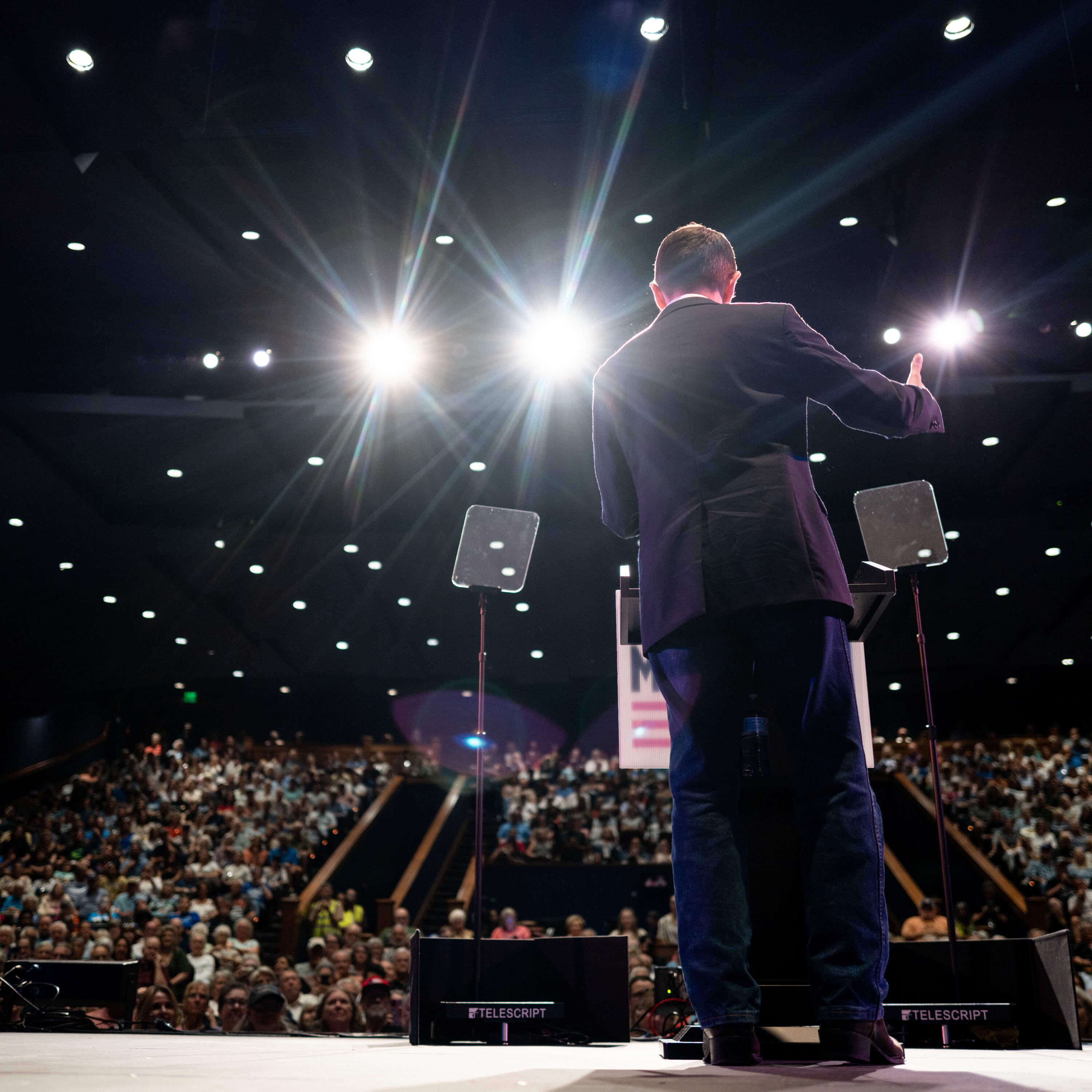
04:35I want to speak to you this morning, not as a candidate, but as a fellow Christian. On a Sunday this summer, he stood at the pulpit of Brentwood Baptist Church in Houston. My granddad was a Baptist preacher in South Texas. And when I was real little, he told me that Christianity is a simple religion. Simple, he says, but not easy. Because Jesus gave us two commandments to follow. Love God and love neighbor. On this morning, Tallarico was preaching on a passage from the Gospel of Luke. Sometimes we see the world most clearly through our tears. If your heart is breaking as you watch what's happening to our beloved country it means you still have a heart so blessed are you who weep Blessed are you who weep. Tallarico often frames this campaign as being on the side of those who have been harmed by policies of the Trump administration and who are upset about it, those who weep.
05:40He's talking about the Beatitudes there, right? And, you know, I always personally think about the scripture that says God is close to the brokenhearted. But that's where that comes from, right?
06:10The congregation he's addressing on this day is almost entirely black. As we've reported extensively in Texas, Republican-led redistricting has diluted the black vote and black political power. So he's referring to the loss of that hard-won influence and that pain, the weeping it's caused. And I understand there's another clergy candidate running in Texas, specifically because of redistricting. That's right. The Democratic nominee for the U.S. House District 30, which encompasses part of Dallas and some southern suburbs, Frederick Haynes. He is the head pastor of a large congregation, the 13,000-member Friendship West Baptist Church. He got up. He got up. That's why you ain't got to stay down, because he got up.
Frederick Haynes and redistricting
06:58Hallelujah. Hallelujah. He's led the congregation for more than four decades. I visited Haynes while he was hosting an interfaith forum to talk about community needs and the need for black and brown voices in politics. I've spent my ministry on the outside, you know, fighting people. what's happening inside and Now, It's as if... God is saying, okay, you've been called. to bring outside voices and an outside vision. in the House. Haynes says he was specifically inspired to run for Congress after the Texas legislature redistricted and eliminated one of the state's two black U.S. House districts. I asked him if there was a biblical passage that inspired both his ministry and this campaign. I'm a Luke 4 Christian because Jesus says the spirit of the Lord God is upon me because he's
08:02by systems that's what the greek says Set the captives free. Heal those who are broken. Broken by feeling disenfranchised both politically through redistricting and economically, whether it's by inflation or just lack of opportunity. Now, how competitive are these races? Well, we know that the Tallarico-Texas Senate race is very competitive, a real toss-up according to polling. The House seat in Dallas, where Haynes is running, is safe for Democrats since it's the last predominantly black district left in the state. But this would be Haynes' first elected position. So we have two Democrats from Texas running on faith, Frederick Haynes and James Tallarico. Who are some of the others? Thank you.
Iowa candidates Trone Garriott and James
08:47Well, it turns out there are two clergy people in Iowa running for the U.S. House as Democrats. In the third congressional district is Sarah Trone Garriott. Lift up your heads to see and hear the proclamation of the good news made flesh in Jesus Christ. Trone Garriott is a Lutheran pastor who's also served in the Iowa Senate since 2021. I visited her in Des Moines on a Sunday morning when she was leading worship at a Lutheran church. She was encouraging her congregants to open their minds about what God's reign might look like. The kingdom of heaven challenges what we have come to expect. or learned to accept. She says she hears her call to public office in a familiar story from the Gospel of Luke. Jesus tells the parable of the Good Samaritan. Everyone is your neighbor. Anyone who is overlooked and left behind and forgotten, that's who you are called to help. And that is the calling of government. The calling of government, she says, is to help the forgotten
09:56is the small town of Waverly. I accompanied the other Democratic clergy person in Iowa running for the U.S. House as she shook hands at the county fair. Hi, Lindsay James, running for Congress. Nice to meet you. Lindsay James is a Presbyterian chaplain, a four-term state house representative, and the Democratic nominee for Iowa's second congressional district. She remembers the moment she decided to run for federal office. After the big, beautiful bill was passed from D.C.
10:30Iowa's second congressional district. And Aisha, rural health care is critical in farm country, and James says the way she can best care for her neighbors, also alluding to the gospel story of the Good Samaritan, is taking their cause of rural health care to the U.S. Capitol.
10:53So, Jason, how are these candidates, Republican opponents, responding to their campaigns? I'm sure they're not just taking this lying down, you know. I'd say there's a unified theme of opposition in both Texas and Iowa. And among other things, the GOP candidates are actually questioning whether the Democrats who are clergy are really Christians.
Republican attacks on their faith
11:23who's getting into heaven, who's really about it. But the thing with this is these are these Democrats who are running for office, They're clergy or they're in seminary. So how are these Republicans making the argument that they're not Christians? Well, here's James Tallarico's Republican opponent, Texas Attorney General Ken Paxton, speaking at a campaign rally. We cannot let Texas turn. based on a deceiver like James Tallarico, who does not want the world to know who he really is. Paxton and his campaign repeatedly raise this idea that he's hiding something about his religious beliefs, and they describe Tallarico as an out-of-touch radical. Now, here's Texas Lieutenant Governor Dan Patrick talking about Tallarico earlier this year at the state GOP convention. I've never seen so much blasphemy from anyone running for office. And let me tell you what,
12:20Because when he loses the Senate race, if he campaigns against God as he's been doing, he's gone to hell for sure. Wow. I mean... Saying that someone is going to hell is a big deal. How has Tallarico been responding to these types of comments? He's actually incorporated a response to these attacks into his preaching and campaign rallies, giving specific examples of what he says are GOP actions. The real blasphemy is kicking the sick off their health care to fund tax cuts for billionaires. The real blasphemy. is letting children go hungry in the wealthiest nation on earth. The real blasphemy is homeless veterans sleeping on our streets. Well, you know, Jason, you know, it seems like what these politicians are doing is calling each other blasphemous because they have different understandings of how to interpret scripture.
13:29these races is how J.D. Vance talks about the biblical idea of neighbor being those closest to you, while others, including many Democrats, we just heard Lindsay James say it, your neighbors are the people most in need. Now, a similar clash of interpretation is coming from Frederick Haynes opponent Everett Jackson in the Dallas House race. Jackson questions Haynes' faith and his leadership.
13:59Jackson is a Dallas area businessman. Here he is speaking on a conservative YouTube show called Disturbing the Peace. Because a shepherd, the good shepherd, as we're taught by the Lord, they would see to the safeguarding of the sheep and lead them in a righteous path. This is not what Freddie Haynes is doing. Freddie Haynes has politicized the gospel. And thus for what? mislead his parishioners. So that's Texas. You know, the Midwest is usually known for less heated language, a little more nice. Are the opponents of the Democratic candidates there being a little more cordial? In a word, no. In fact, Sarah Trone Garriott's opponent, incumbent GOP Congressman Zach Nunn, criticizes her for how she's carried out her ministry,
14:51ago. When Tron Garriott was an intern, she assisted at a wedding for two people who weren't Christians. In fact, they said they were Satanists. Satanists? Okay. So this is a little bit of a strange story. These two people were getting married. They weren't Christian. They needed someone to officiate. So they knocked on the door of the church where Tron Garriott was an intern. And they didn't really look like lovebirds. She talked about that moment at a Des Moines Register storytelling event. Were they testify against each other? The pastor of that church agreed to do the wedding out of kindness and asked her to assist. Irritated, I flipped through the Bible thinking, should I pick something with Satan in it to make them feel more at home? But for her opponent, Congressman Nunn, finding out about these Satanists was ripe material. Here he is speaking on News Radio 1040 WHO in Iowa. She talks about the situation like some kind of a charming story.
15:55So that Satanists could feel more at home.
16:14Love is kind. And in the moment, when I glanced up, I was struck. by the sudden tenderness on her face. And Aisha, I'll point out that when I interviewed her, Trone Gary defended both assisting with the wedding and telling the story. It's a story about the power of scripture. And I believe it spoke to that couple in that moment who seemed like the wrong people in the wrong place. And it was speaking to me. So it's like she's arguing that she was ministering to the Satanists, you know, the way you minister to the lost. That does sound like what she's talking about there. Also, just being present for people who were in need. So, Aisha, let's go to Northeast Iowa next, to the open house district where Lindsay James is running. Her opponent, Republican businessman Joe Mitchell, also questions the ministry of not only James, but also of Sarah Trone Garriott. Here he is at the Conservative Evangelical Family Leadership Summit this summer. I call them Pinos. Pastors in name only because they're not real pastors, right? They don't profess the true gospel of Jesus Christ.
17:30Well, one of the things both Mitchell and Nunn bring up relates to Trone Garriott and James serving in the state legislature. They both voted against bills that would have restricted transgender rights. The Republicans argue those votes are anti-Christian.
18:00too, very liberal. And while their opponents are framing them as radicals, these candidates are pretty centrist Democrats on a lot of issues like health care and taxation. We'll be right back.
Voter reactions in the pews
18:19I'm Aisha Roscoe. This is a Sunday story. We're back with NPR religion correspondent Jason DeRose talking about the Democratic clergy running for Congress in this year's midterms. Jason, let's turn to how voters are responding to these campaigns. There's a Pew Research poll that says less than one third of Democrats say religion is important to them. You spent a lot of time on the ground in Texas and Iowa. What did you hear? What I found on the ground, or rather in the pews at campaign events and on the streets and at county fairs, is a range of responses. Since we're talking about clergy talking about faith, let's start with how people of faith are responding. Among the churchgoers I spoke with, folks fall into two general categories, enthusiasts and skeptics. Candace Stroud was sitting in one of the pews at Brentwood Baptist Church when James Tallarico spoke there. She's been a member for
19:18and she's glad Tallarico embraces his faith while campaigning. I think Democrats have been talking about religion for years. It's just nobody wants to listen to us if you don't say what they want to hear. When you say they, what do you mean? The Republicans, basically. They don't want to hear that we are Christians. We go to church. We believe in the Bible. And Tallarico's Christianity, Stroud says, sounds a lot like her own.
19:48you know, I'm a person of faith. I go to a black church, been at the black church all my life. And a lot of black churchgoers are very conservative. and they're aligned with conservative values. But being black, they just they're not going to vote Republican. I remember back in the day with family members, I had one family member who was against gay marriage and she was thinking about voting for George W. Bush. But then another family member was like, you can't just vote on that issue. You know, it's more to it than that. You know, Aisha, that example, I think, really speaks to something that was very true a few decades ago, but less true today. Pew Research has done extensive polling on this. And there's been a lot of political movement toward acceptance of things like same-sex marriage and LGBT issues more largely within the black church, also greater acceptance of legal abortion in historically black churches. I wonder if you've noticed that change over the years.
20:50I think that there are bigger mainstream churches that are more accepting of gay people. There is still a lot of churches that are homophobic or that are not supportive of the LGBTQ community. But... Even with a lot of those churches, it's not their main focus. It's not something they're preaching about from the pulpit every Sunday. I think there's still a big focus on church. Justice and racial justice And that shows up more even in those churches. Yeah, I think that's true. I found that in my own reporting, and I see this from, you know, Pew Research as well. Now, Aisha, let's consider another view from the pews, or actually a view from the coffee hour. That's where I spoke with Rich Schneider, who heard Sarah Trone Garriott preach at Grace Lutheran Church in Des Moines. It's a predominantly white congregation, lots of families. He tells me he's not naturally inclined to want clergy in politics.
21:51skeptical until I get a chance to... listen to their expressions of faith and how they... how they view... their calling. And when it becomes... of calling rather than a prescription. or a bully pulpit, then I'll start to listen. Snyder says he likes what he hears from Tron Garriott on the campaign trail, but he's also glad that she does not preach overtly political sermons. She doesn't talk about running for the U.S. House while she's preaching. Tron Garriott says she's careful to distinguish when she's acting as clergy and when she's acting as a politician. But these callings, of course, influence each other. OK, so that's the view from the pews, as you put it. I like that. How about the take from people at campaign events?
22:38Well, let's go back to that interfaith forum in Dallas that Frederick Haynes held. It was meant as a way to hear people of faith's concerns about issues like housing and voting rights. About 50 people attended, mostly Christian church leaders from different denominations, Baptist, Methodist, Pentecostal, but also a fairly large group of Muslims.
23:08So I wanted to hear what their big issues were. I think I can speak to this firsthand. Ali Askar Aliabi is a professor at the University of Texas in Dallas. He says the Muslim bashing hits home. Living in Texas right now and seeing what's going on with Islamophobia right in my backyard has certainly made my job a little bit more challenging, but I'm ready for the challenge. Ready, he says, in part because of the people of Christian faith he's met at events like this. like Reverend Haynes. The people that I found solidarity with, with, you know, my liberal values or my religious values or my social justice values were often the faith groups here. And he says given the anti-Muslim rhetoric in Texas politics right now, he's glad Haynes specifically invited Muslims like himself to talk about their concerns.
Voters at campaign events and doors
24:00But, Jason, let's pull back for a moment. You've mentioned that a lot of Democrats aren't religious in any way, Christian or Muslim or anything else. So how do these candidates play with them?
24:30referring to the Gospels. Taking in these messages was 40-year-old nurse practitioner Brandon Sterling. I would say I'm more spiritual than religious. The only thing I do religiously is I get up, I go to work, go to the gym. Sterling's pragmatic about what it'll take for a Democrat to get elected statewide in Texas. We're here in the South. You know, a lot of people lead their political views with their religious views, if you will. So if this is how you have to reach offend me at all, especially what he's saying. love thy neighbor. I'd call that the indifferent toward religion group. Jason, though, what plays at a political rally or a church isn't necessarily what plays a on the streets, right? I'm Sarah Tron-Garriott. I'm state senator for Dallas County and I'm running for Congress. Hi, how are you doing? So on a humid Sunday afternoon in the western suburbs of Des Moines, I accompanied Sarah Tron-Garriott canvassing for votes. I'm a minister, I'm a state senator. One of the doors Tron-Garriott knocked on belonged to Stephen and Casey Hendrickson. The big issue for them? I said everything. We just went grocery shopping and just, it's amazing how you can get like 20 items and it costs 100 bucks. The couple isn't especially
25:46religious, but when I asked their thoughts on clergy running for office? I think they have an ability to work with people more so than others. They've actually seen people go through things and are willing to help people. Moral compass will be on the higher side versus those that don't. would be my guess. So not religious, but they think maybe a person of faith could bring better ethics to Washington. Right. And what they said about the cost of groceries, I heard that a lot while reporting this story. It was a theme in both the Des Moines area and in rural Bramer County in northeast Iowa. While I was walking around the county fair there with Lindsay James, lots of people raised real bread and butter issues. Yeah, I've seen your ads quite a bit. Oh, have you? Oh, good.
26:35Good, we're not spamming you. No, no. Among the potential voters she met while touring 4-H exhibits and sampling cheese curds was Lindley Sharp. Sharp works in public health and worries about budget cuts to programs like vaccination campaigns and health education programs. It's going to mean less money for local public health down the line. after some of their federal Standing nearby was Kip Ledeigy, who works in emergency medical services. Look at the Medicare and Medicaid reimbursement that we get, because we're getting hoes here. If we have a $600 call, we're lucky to get $140. I've got all the charts. While neither ambulances nor public health may seem like religious issues, for Lindsay James, they're deeply moral ones. And she says they're why she decided to run for the U.S. House.
27:26But Jason, what about those voters who really don't like any God talk in their politics? You know, when they hear people of faith, they also want to hear what about people with no faith? Well, it's definitely a concern for Democrats, and one I think is best embodied by someone I met while out following folks knocking on doors in Houston in support of James Tallarico.
Non-religious voters and concerns
27:52Her name is Kristen Kott. She cares about improving schools and worries about the recent flooding in her neighborhood. When I asked her about James Tallarico's focus on faith...
28:09play. Why is that? Well, because I don't think religion should play into government and politics at all. I mean, I thought the country was founded on that. Aisha, that's a very important point of view to keep in mind for Democrats talking about faith on the campaign trail. Yeah, you know, I have a friend who was a pastor and he ran for office as a Republican. He lost and then he actually repented because he felt like politics were too divisive. And if he's going to spread the gospel of Christ, he didn't want to be limited to just one party, right?
28:59in. Well, that's where I think threading the needle comes into play. I will say that many of these candidates have figured out how to do it, though, at least in state politics. Lindsay James is a statehouse representative. Sarah Trone Garriott is a state senator. They're clergy, and they're careful to not campaign from the pulpit. Is there any indication that these messages about faith, whether it's about the Good Samaritan or the Beatitudes, have moved the needle among voters in Iowa or Texas? Well, you know, it's hard to say what specifically has moved the needle, but it's moving. It could be that independent voters and swing voters are just motivated by the economy or the Iran war or the dislike of the White House ballroom. But there's been significant movement in these places where clergy are running. In the course of my reporting this story, the Cook Political Report moved the Senate race in Texas between James Tallarico and Ken Paxson from leans Republican to
Is the needle moving?
30:00That's huge in Texas. And earlier this year, Cook moved Iowa's third congressional district, where Sarah Trone-Garrett is running to unseat Zach Nunn, from Leans Republican to toss-up. So there appears to be some real traction. So there's traction, but it's still a balancing act, being both a religious leader and a politician.
30:30James and Trone Garriott and Tallarico to run is part of the answer, the story of the Good Samaritan, that story of the person who helps a man lying injured on the side of the road from Jerusalem to Jericho. There's a specific interpretation or reading of that story that Lindsay James, the Presbyterian chaplain, brings up. It's from Martin Luther King Jr.
31:00pick up the person who's hurting, but to actually fix the road. James is deeply motivated by this concept of the Good Samaritan, but I didn't hear her once bring up religion while talking with voters who were worried about emergency services or public health at that county fair. So she's walking that fine line. Still, Lindsay James sees that road to Jericho today as underfunded health care in rural Iowa. And repairing it is what her faith and the in public life. It's her way of serving her neighbor. Jason, thank you so much for bringing us this story. You're welcome. Glad to do it. That's NPR religion correspondent Jason DeRose, who's been reporting on clergy running for Congress as Democrats.
31:49This week's episode of The Sunday Story was produced by Sharon Mashihe and edited by Jenny
32:00Lee Huang. Special thanks this episode to NPR senior editor for religion and spirituality, Daniel Burke. The rest of the Sunday story team includes Andrew Lambo. Our supervising senior producer is Liana Simstrom and our executive producer is Irene Noguchi. I'm Aisha Roscoe and Up First will be back tomorrow with all the news you need to start your week. Until then, have a great rest of your weekend. Thank you. you