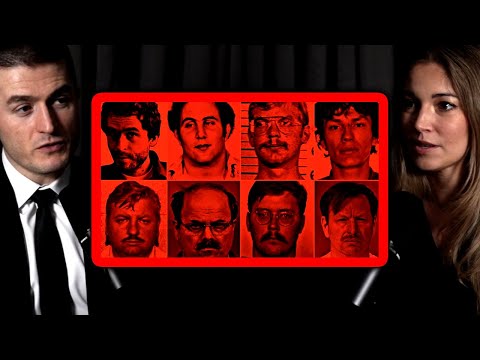
Psychology of serial killers | Julia Shaw and Lex Fridman
- Length
- 15 min
- Language
- English
- Text from
- the video's captions
- Transcribed
- 12 October 2026
Summary
Julia Shaw talks with Lex Fridman about the psychology of serial killers, using the Robert Pickton case as an example of how loneliness and a lack of reality monitoring can allow dark thoughts to escalate. She argues that everyone is capable of terrible acts, that murder fantasies are common and can be adaptive, and that rehearsing resistance through a 'heroic imagination' helps prevent evil. She also discusses bystander research, noting that most bystanders do intervene, contrary to the Kitty Genovese narrative.
Key points
- Julia Shaw was influenced to enter her field by the Robert Pickton case, taught by expert witness Stephen Hart at Simon Fraser University.
- Serial killers often share profound loneliness, which contributes both to their crimes and to going undetected due to a lack of reality monitoring from social networks.
- Dark tetrad traits like psychopathy, low empathy, and sadism combine with being untethered from reality, as with Jeffrey Dahmer's attempt to create a 'perfect partner.'
- Shaw believes all of us are capable of the worst things we can imagine, citing neighbors turning on each other at the start of wars.
- Research finds about 70% of men and more than 50% of women have fantasized about killing someone, which can be an adaptive dress rehearsal.
- Persistent rumination on dark fantasies, especially about a specific person, is a risk factor and a reason to see a psychologist.
- Philip Zimbardo's 'heroic imagination' is the practice of simulating stepping up and intervening rather than being a bystander.
- Bystander research shows most bystanders do intervene; non-intervention mostly happens when a crowd has already formed and no one wants to stand out.
Questions it answers
00:00Disturbing crimes and Pickton
What is the most disturbing crime Julia Shaw has covered on Bad People?
The Robert Pickton case, covered in episodes called Piggy's Palace, about the Canadian serial killer who brought kidnapped victims to his farm and reportedly fed some to pigs. The case influenced her career because her professor Stephen Hart was an expert witness at the trial.
- Bad People's title is tongue in cheek, questioning who the 'bad people' really are.
- Stephen Hart's kindness and gallows humor around the case drew Shaw into the field.
- Elizabeth Loftus similarly serves as an expert witness, educating courts on memory.
02:52Serial killer psychology
What psychological factors does Shaw see in serial killers like Robert Pickton?
Profound loneliness contributes to the crimes and lets killers go undetected because no social network performs reality monitoring. Loneliness combines with dark tetrad traits like psychopathy, low empathy, and sadism.
- Without reality monitoring, people can drift into delusions or radicalization.
- Jeffrey Dahmer's attempt to create a 'perfect partner' is an extreme manifestation of relatable feelings.
- Shaw believes the core of these impulses is in all of us.
07:02Are we all capable of evil?
Does Julia Shaw think everyone is capable of evil?
Yes. She points to neighbors turning on each other at the start of wars, arguing it takes little to become convinced your friends are enemies. This is why we should rehearse recognizing red flags when things are good.
- Becoming convinced friends are enemies can unleash terrible acts.
- Rehearsing evil in thought helps us avoid engaging in it.
07:27Murder fantasies
Is it normal to fantasize about killing someone?
Research finds about 70% of men and over 50% of women have murder fantasies, and some researchers consider this an adaptive dress rehearsal. Persistent rumination, especially about a specific person, is a risk factor and a reason to see a psychologist.
- Fleeting murder fantasies are common and healthy.
- Thinking through consequences engages higher reasoning and prevents action.
- Rumination about a specific person warrants professional help.
09:57Heroic imagination and bystanders
What is the heroic imagination and what does bystander research actually show?
Philip Zimbardo's heroic imagination means simulating stepping up and intervening instead of being a bystander. Contrary to the Kitty Genovese narrative, later bystander research shows most bystanders do intervene; hesitation mostly occurs when a crowd has formed and no one wants to stand out.
- The Stanford Prison Experiment, though torn apart, showed how quickly roles change thinking.
- Most bystanders intervene; crowds create hesitation.
- We should normalize intervening and celebrate heroes.
Notes
The Robert Pickton Case
- Julia Shaw's podcast Bad People covered the Canadian serial killer Robert Pickton in episodes called Piggy's Palace, after the farm where he brought kidnapped victims.
- The case influenced her career: her undergrad professor Stephen Hart at Simon Fraser University was an expert witness at Pickton's trial.
- Hart's kindness and gallows humor despite facing one of the worst people in Canadian history inspired her to enter the field; he later appeared on the show.
- Elizabeth Loftus, a founder of false memory research, similarly serves as an expert witness (e.g., the Ghislaine Maxwell case), educating courts on how memory works rather than deciding guilt.
Psychology of Serial Killers
- Pickton was profoundly lonely; loneliness both contributes to the crimes and helps killers get away with them, because no social network performs reality monitoring.
- Without intervention, people can drift into delusions, command hallucinations, or radicalization, becoming more extreme over time.
- Loneliness combines with dark tetrad traits: high psychopathy, low empathy, and sadism.
- Jeffrey Dahmer's goal of creating a 'perfect partner' by piecing victims together is, for Shaw, an extreme manifestation of something relatable, and she believes the core is in all of us.
Are We All Capable of Evil?
- Shaw believes everyone is capable of the worst things imaginable, pointing to neighbors turning on friends at the start of wars.
- Murder fantasies are common: about 70% of men and over 50% of women in two studies have fantasized about killing someone.
- Thinking these fantasies through is adaptive, but rumination—especially about a specific person—is a risk factor warranting a psychologist.
Heroic Imagination and Bystanders
- Philip Zimbardo's Stanford Prison Experiment (since torn apart in various ways) showed how quickly assigned roles change thinking; Zimbardo champions the 'heroic imagination.'
- The Kitty Genovese case was taken as proof of bystander apathy, but later research shows most bystanders do intervene; crowds create hesitation because no one wants to stand out.
- Shaw argues we should normalize intervening and celebrate heroes who risk their lives for strangers.
Text from the video's own captions. Summary and notes written by AI from the transcript, so check anything important against the recording.
More from Lex Clips
- Greatest books of all time | Dan Houser and Lex Fridman
YouTube · 10 min